XRP-III | Experimental Robotics Platform
Developing a 3D printed tracked robot
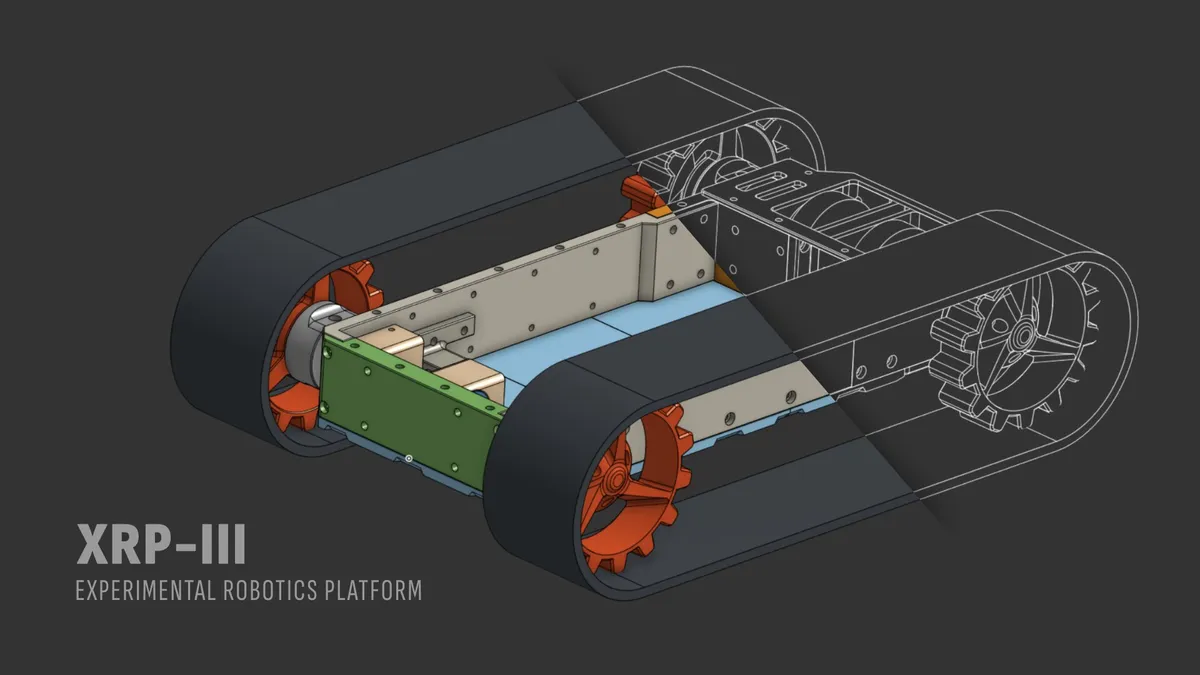
XRP-III (Experimental Robotics Platform) is the third generation of a tracked all-terrain 3D printed robot.
Project status
This project is still in active development and will go through considerable changes.
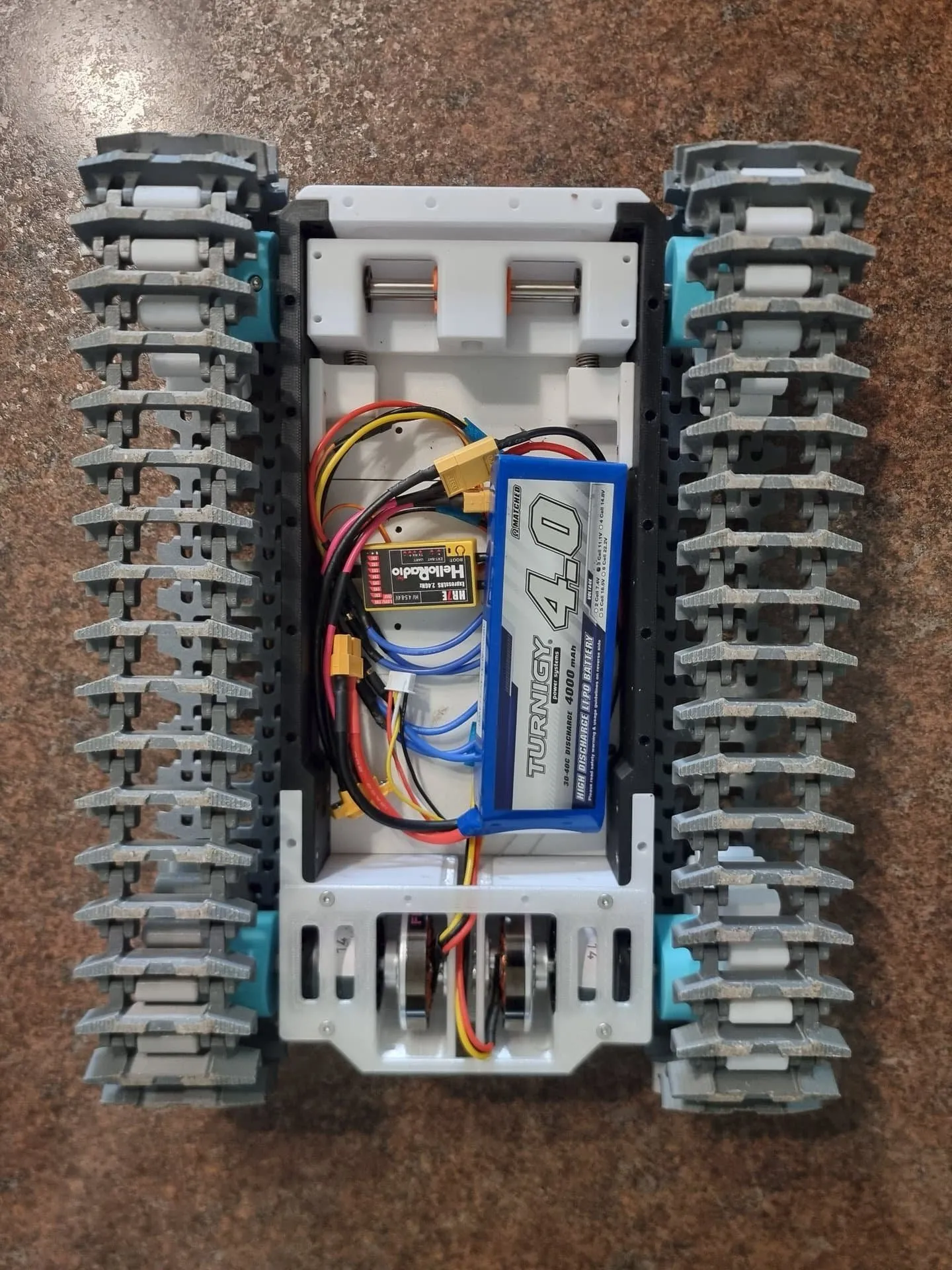
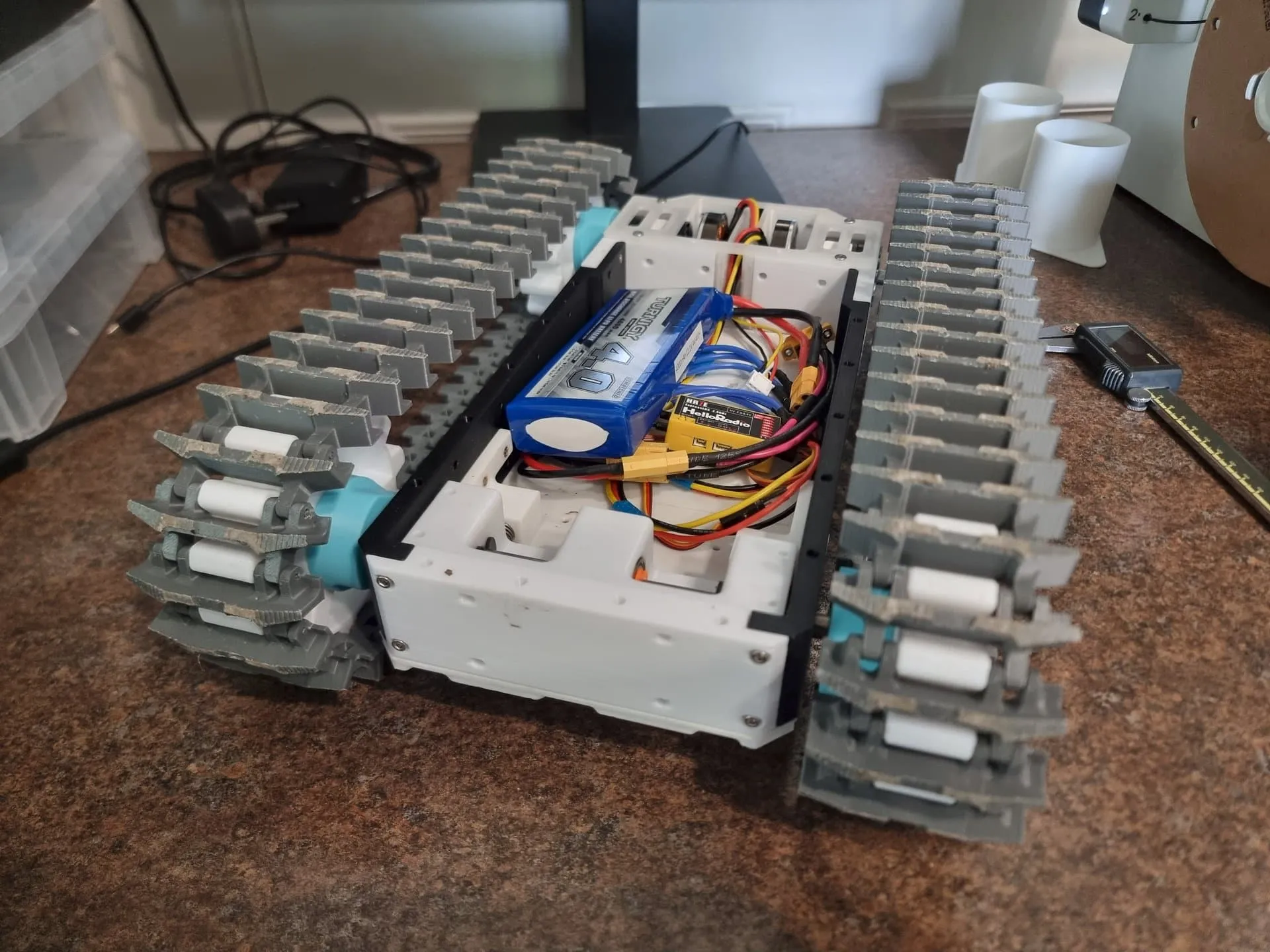
First test drive was on August 30, 2026.
Progress
- Track system
- Tracks
- Sprockets
- Drive system
- Motors
- Gearboxes
- ESCs
- Frame
- Chassis & body
- Chassis
- Body
- Electronics
- SBC
- ELRS receiver
- SIM module
- GPS module
- Camera
- Programming
Background info
First of all, it’s a lot of fun and very rewarding to develop something like this.
This is a project that tests what I can accomplish as a self-taught creator who does not have an apprenticeship or engineering certificate.
XRP-III has an almost fully 3D printed architecture. How how long will the components hold up, and how can I improve them if they break?
Tracks are more challenging than tires, but they’re better on most terrains.
The point is to have a hardware platform that I can extend with sensors, perhaps add a robot arm, and experiment with software and automation.
CAD & prototyping
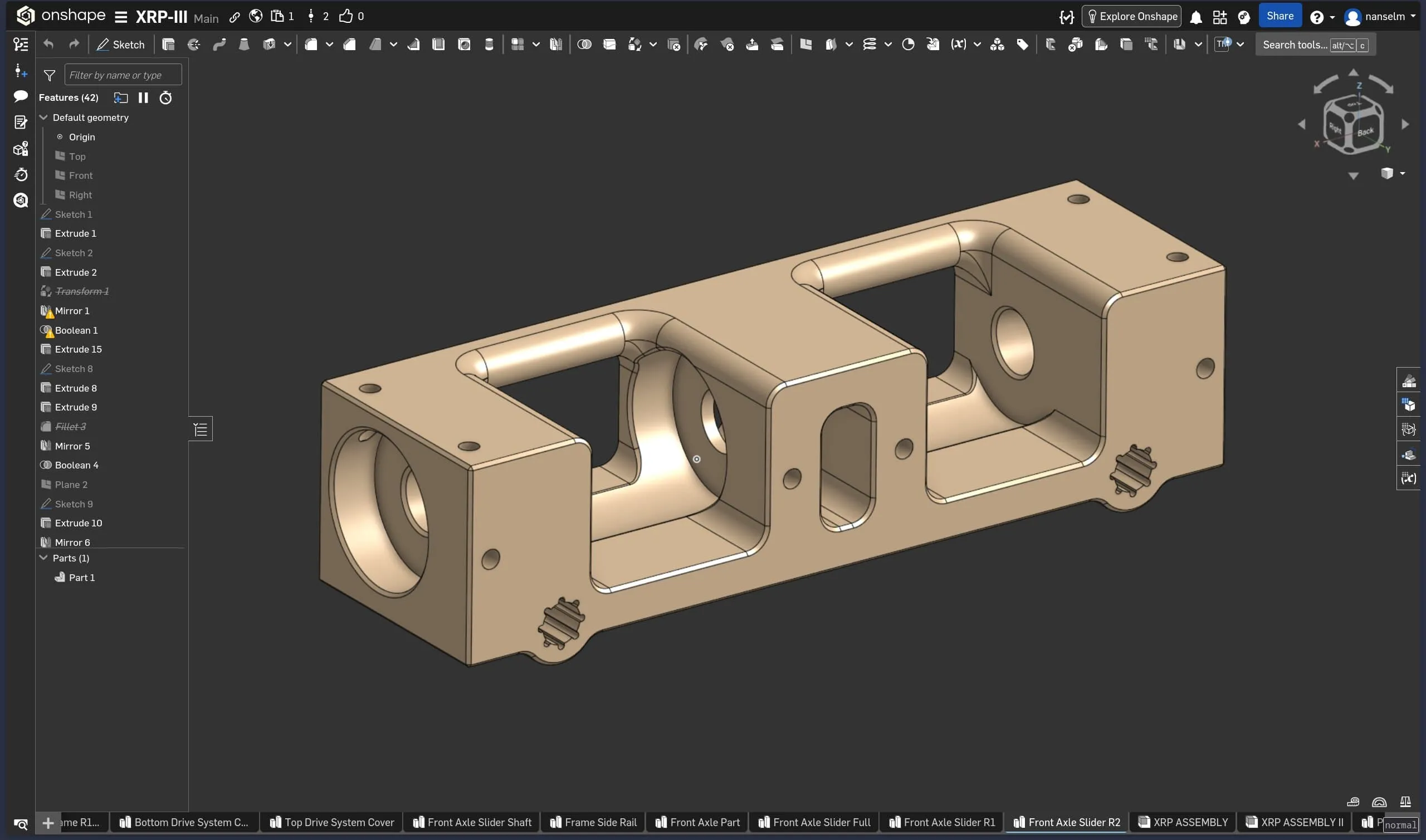
I’m using both OnShape and Blender. Blender is great for developing ideas and making model renders, and OnShape is suited for designing parametric models and creating assemblies to see how parts fit.
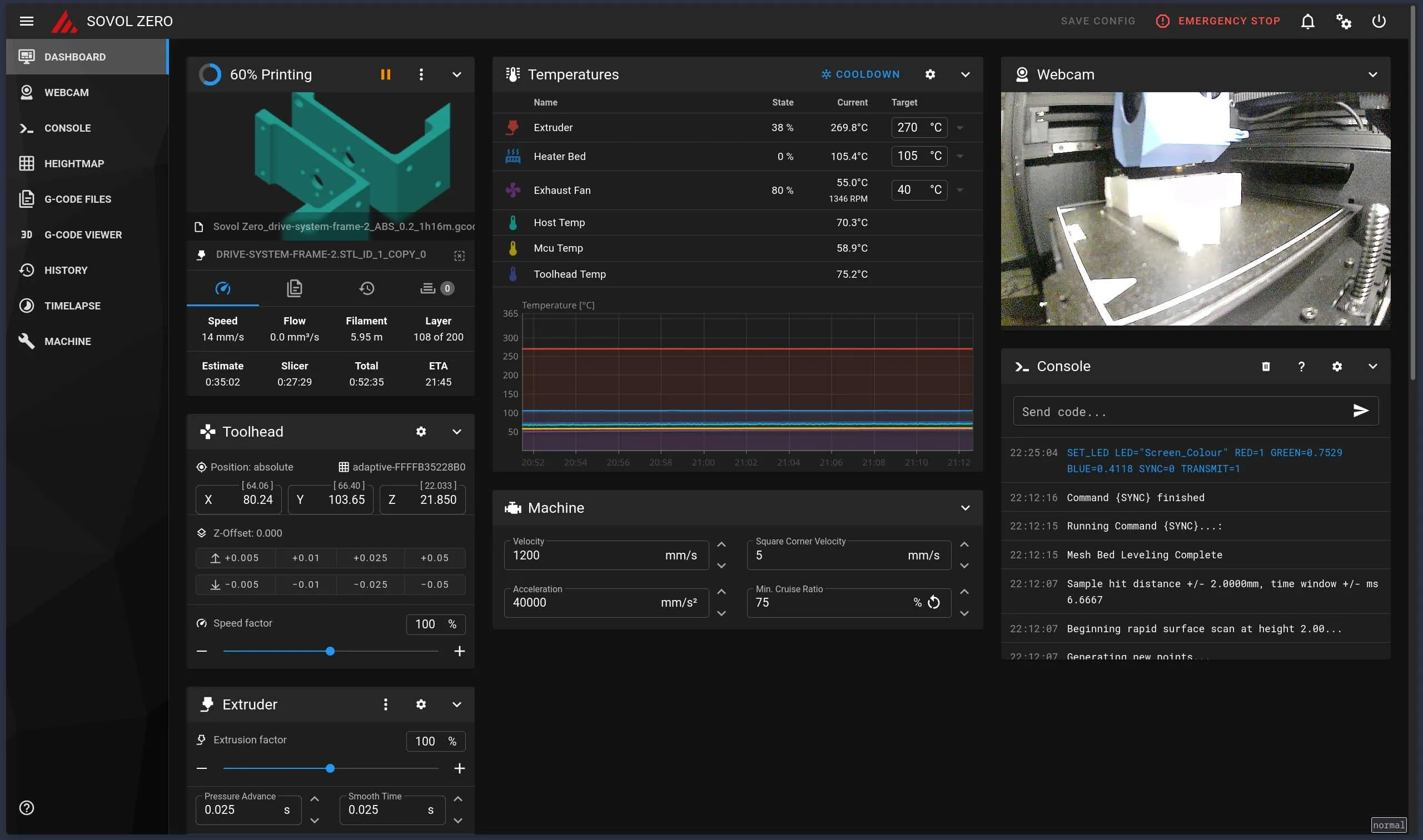
I’ve used my Sovol SV08, Sovol Zero, and my new Snapmaker U1 to print components for this project. (And thanks to both of my bosses for letting me use the Bambu Labs H2D at work.) I especially love the Zero for its rapid printing, which is great for iterative development. The U1 stands out for its multimaterial capability, which works really well for printing parts that need support.
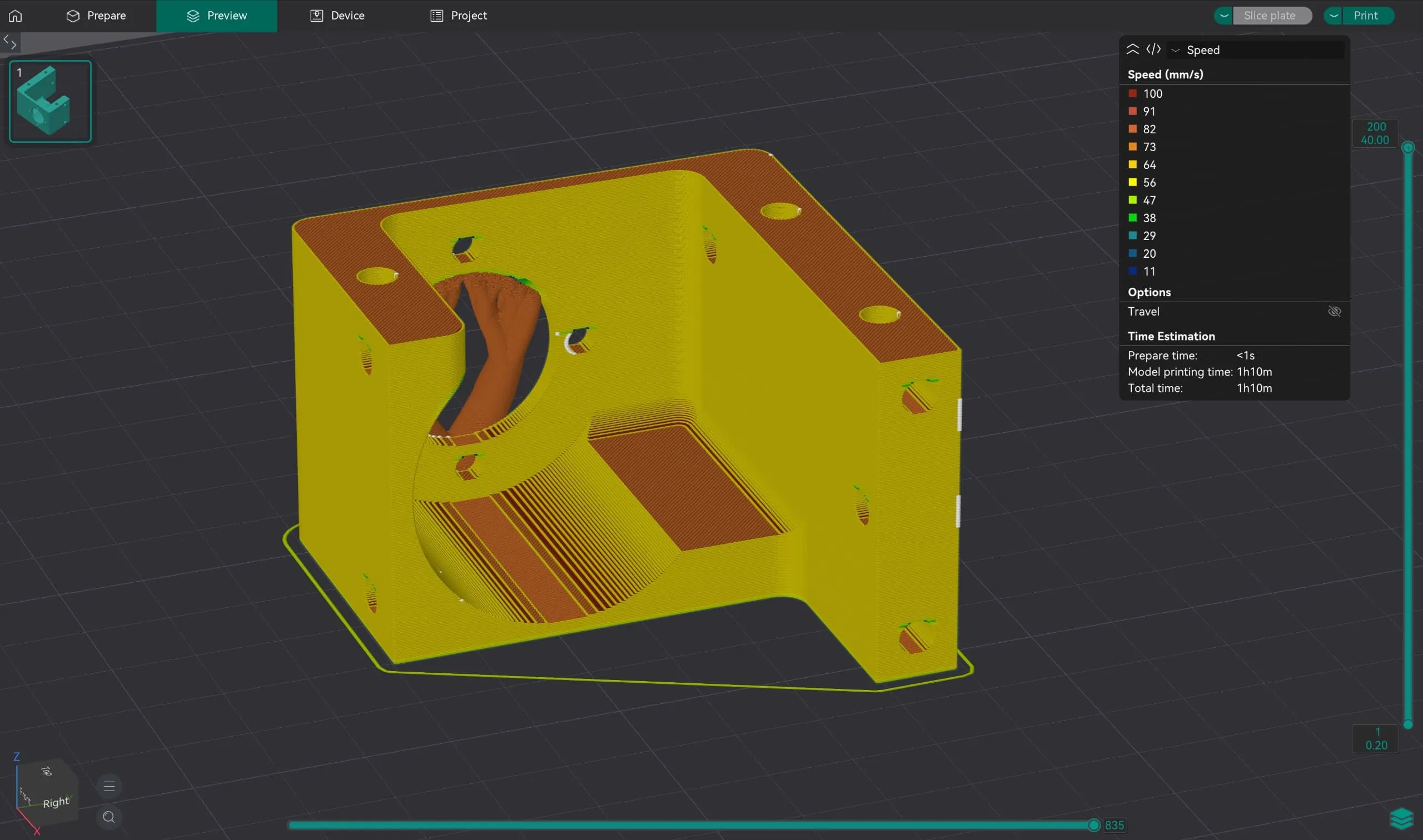
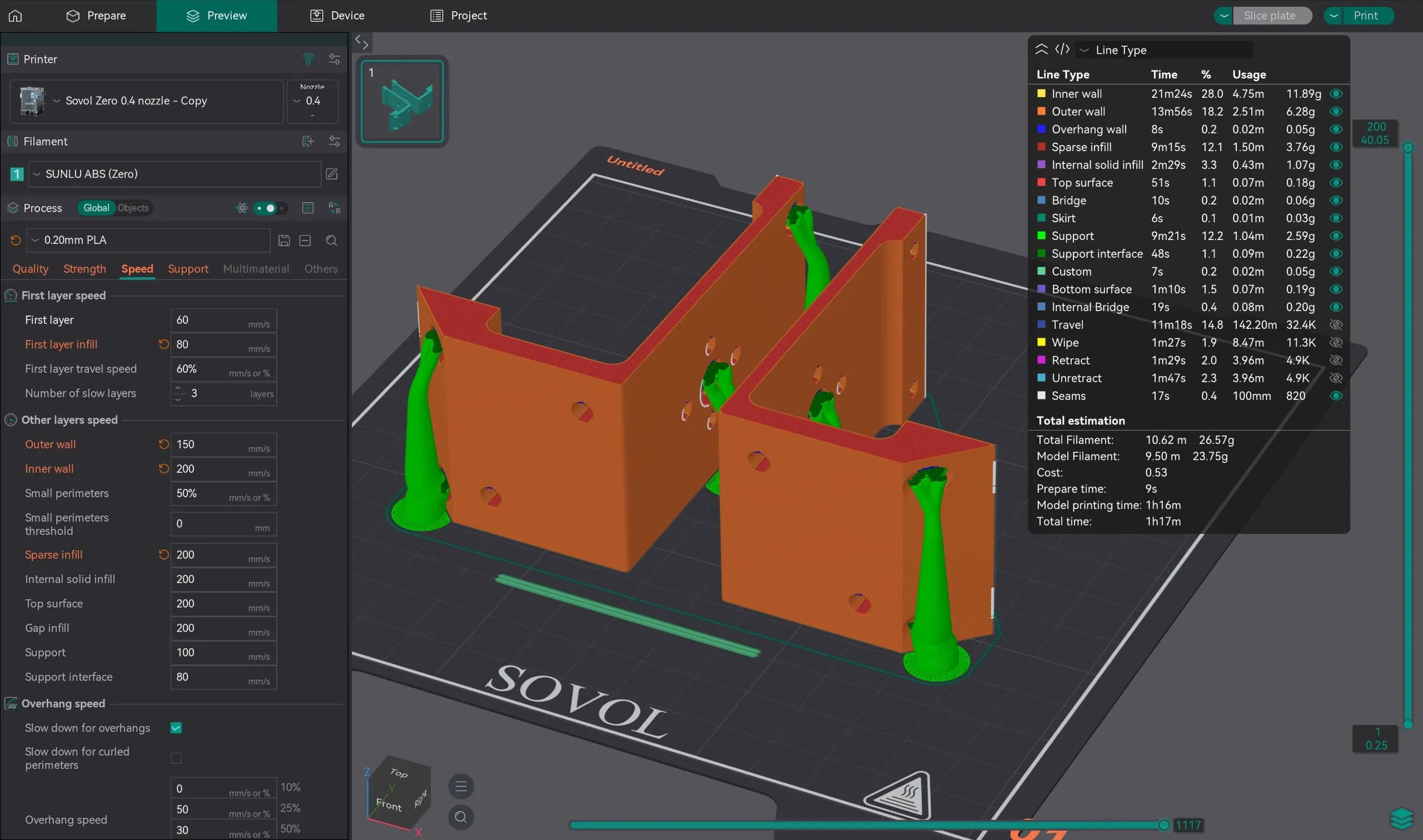
Track system
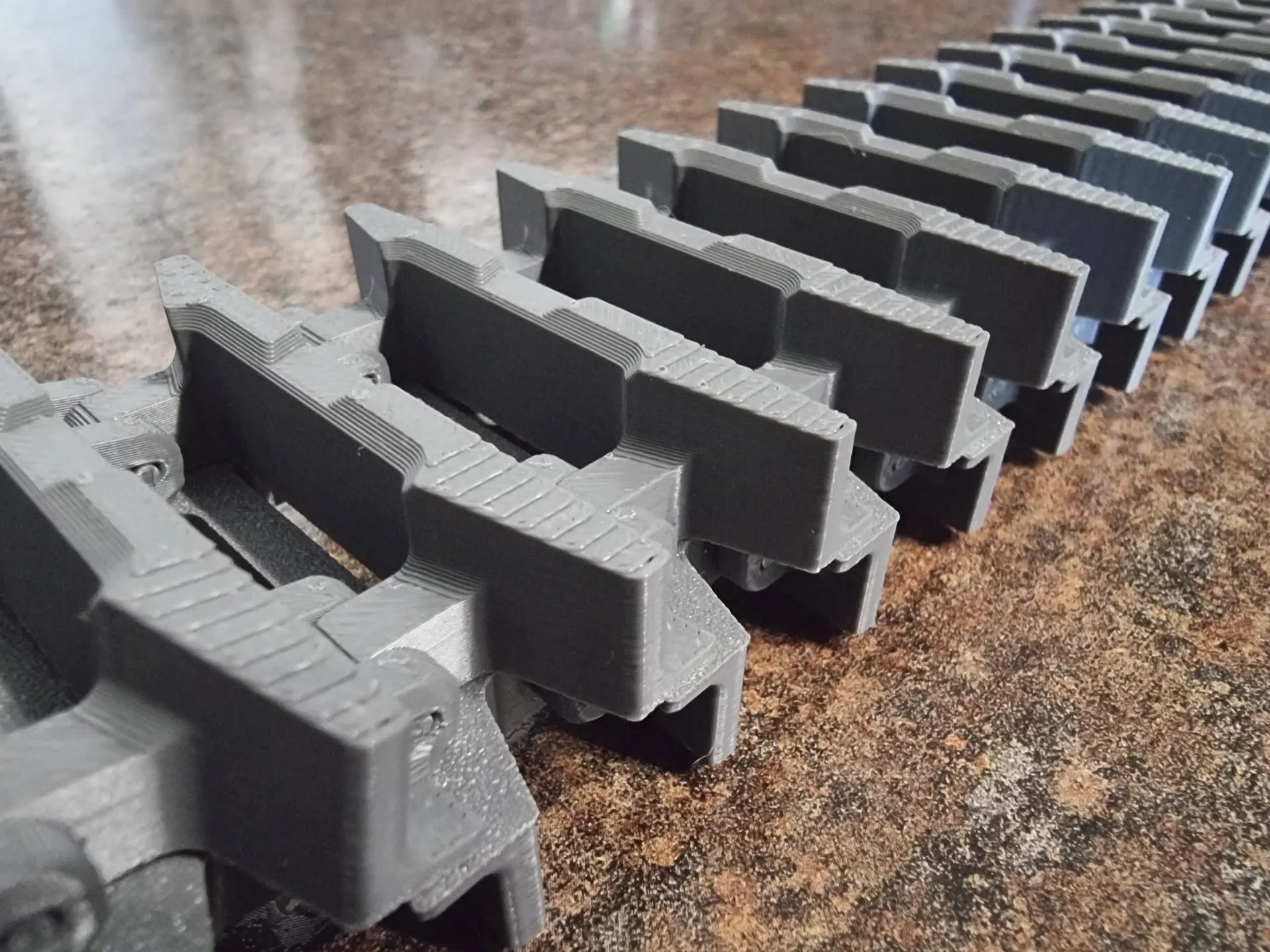
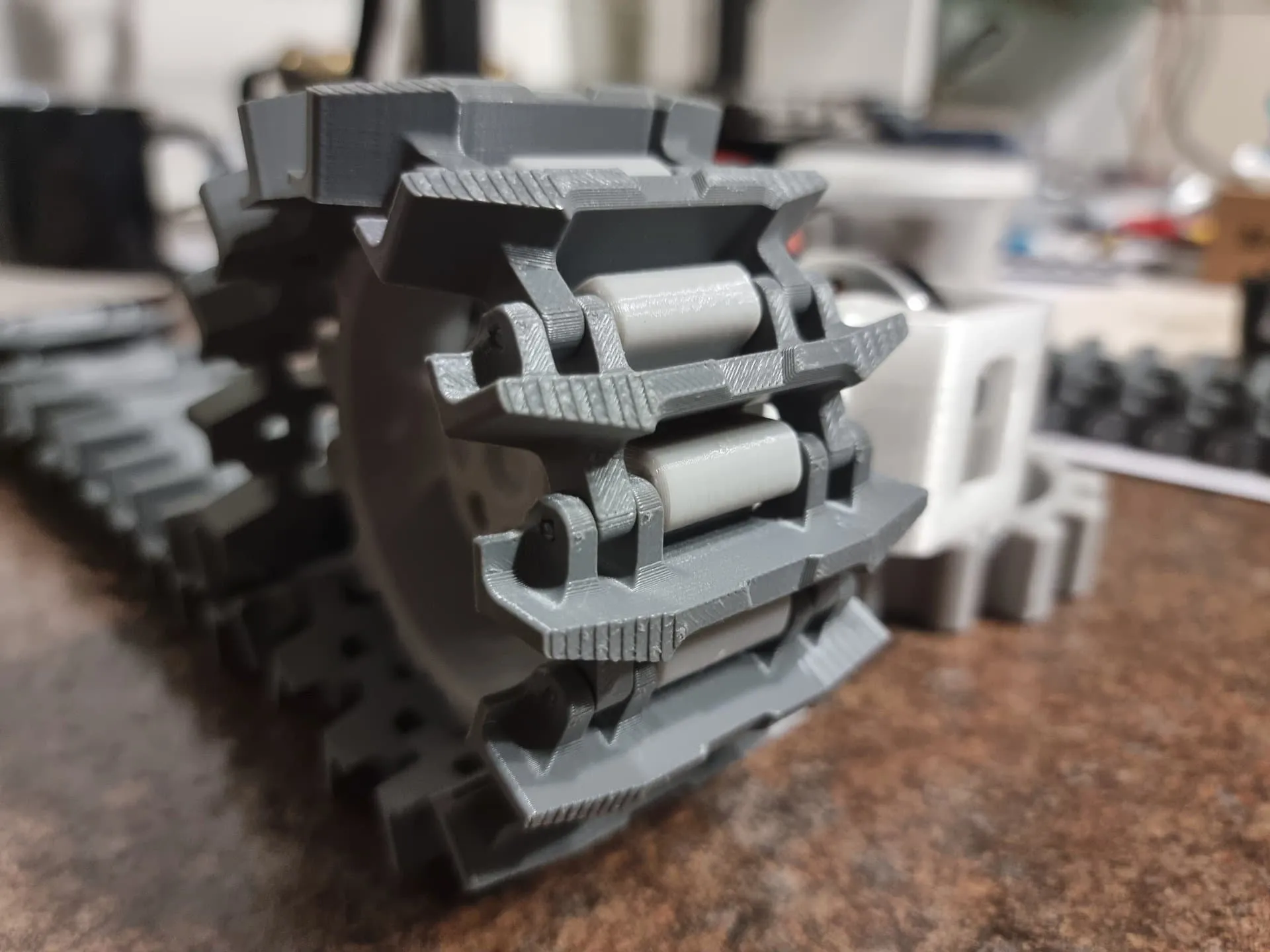
Tracks
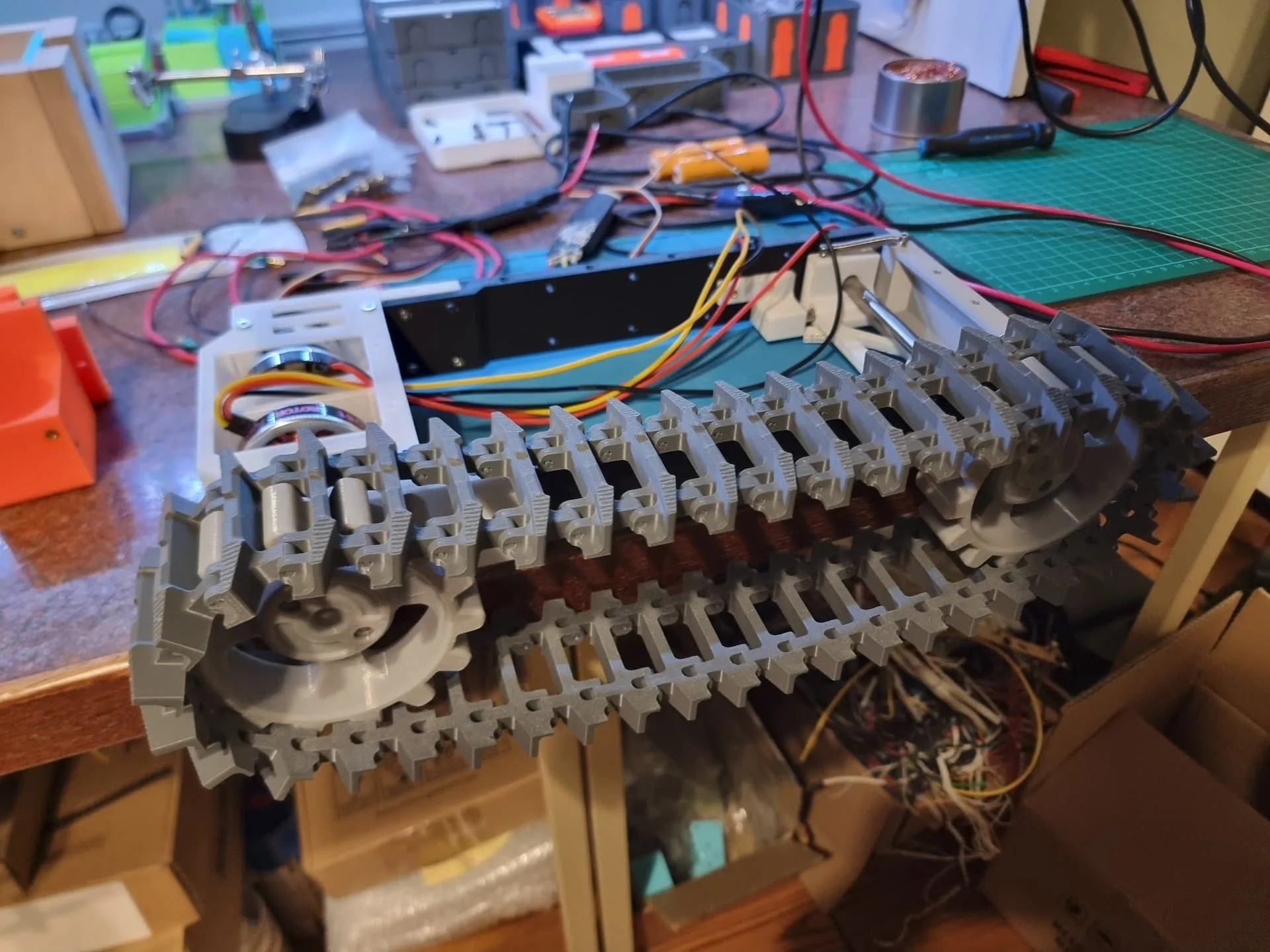
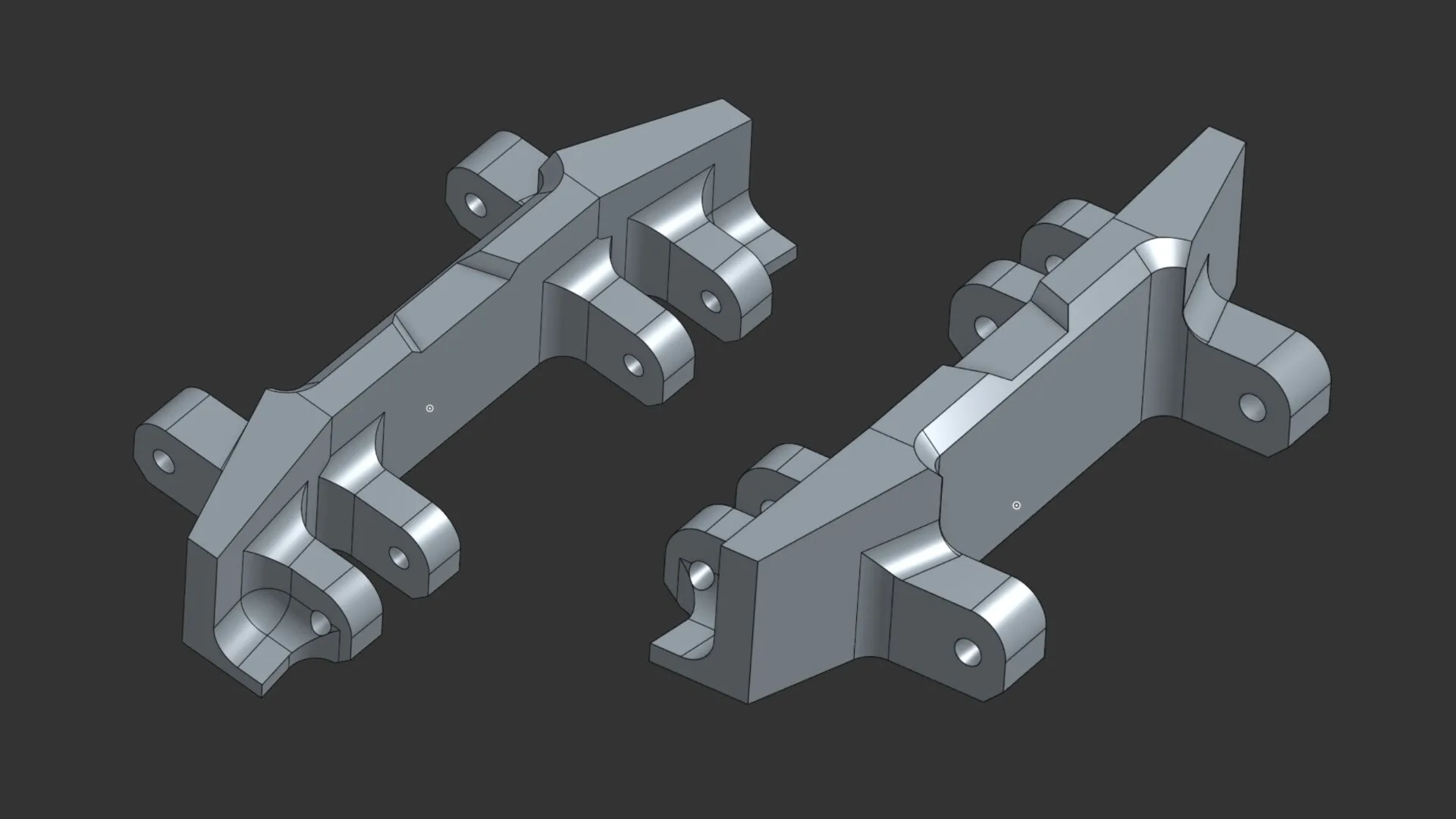
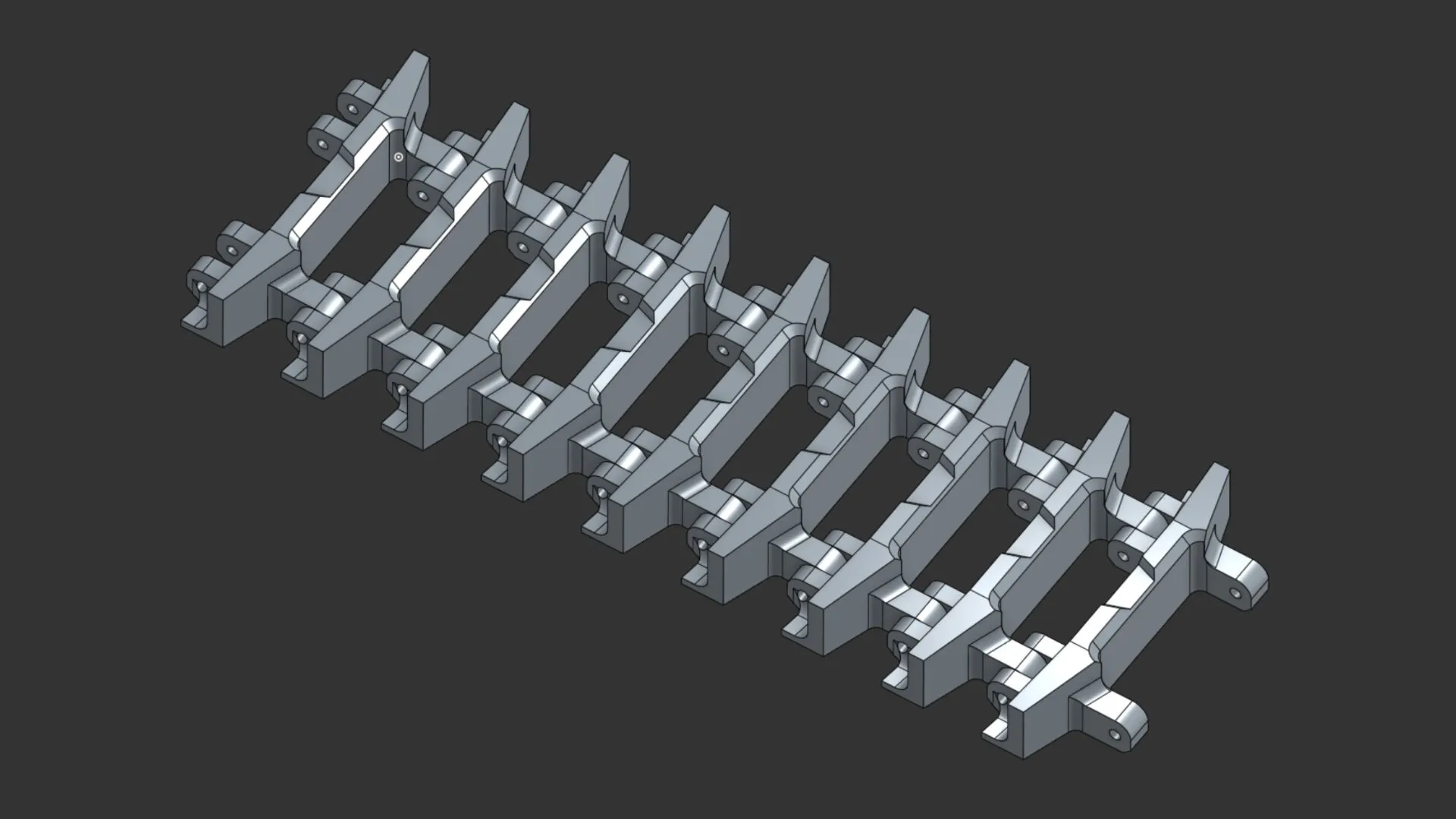
The tracks were redesigned from scratch, based partly on the design on XRP-II, and partly on designs from others.
Printed with PETG.
The treads are held together by short press-fitted PETG filament sections.
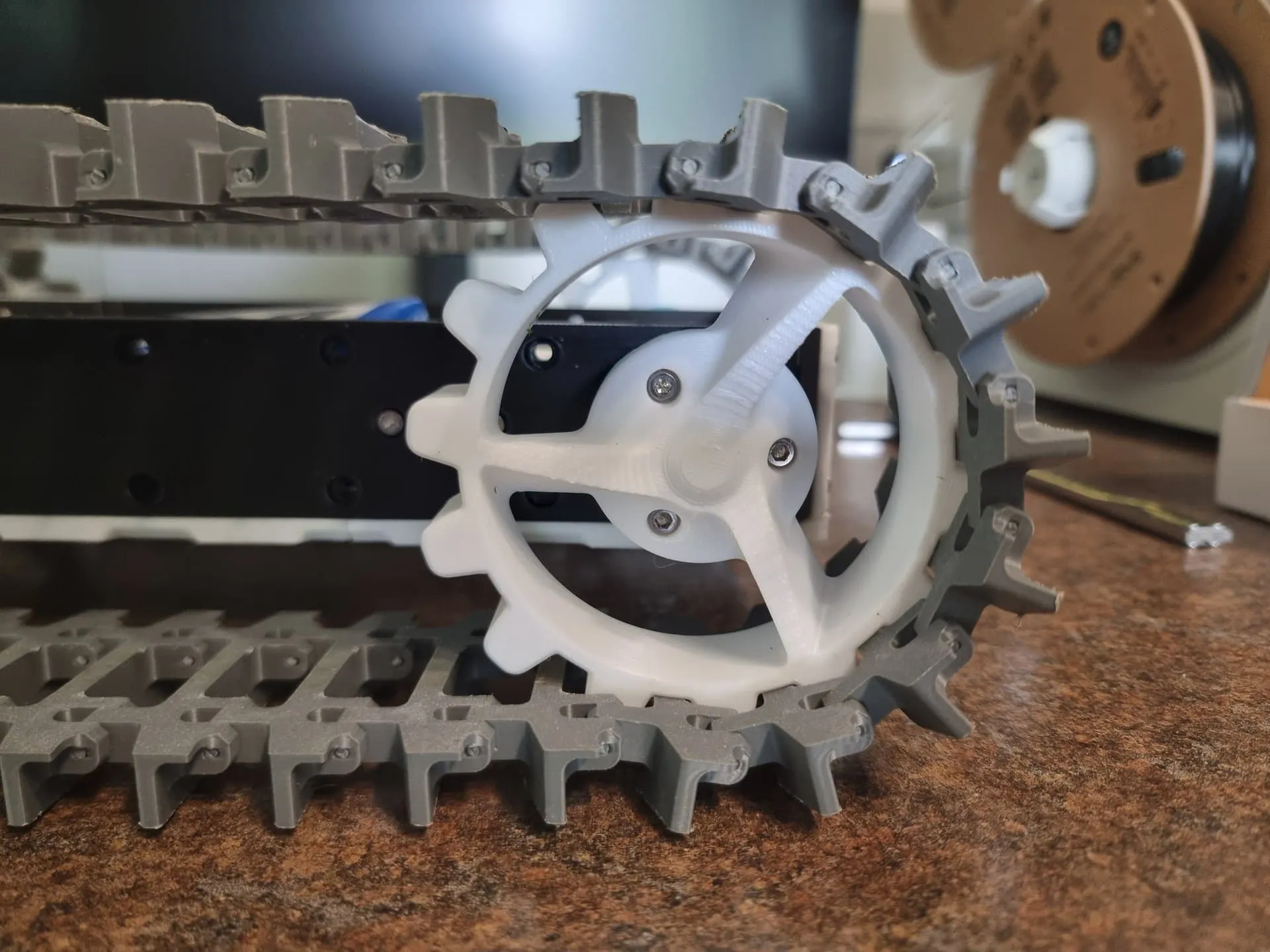
Sprockets
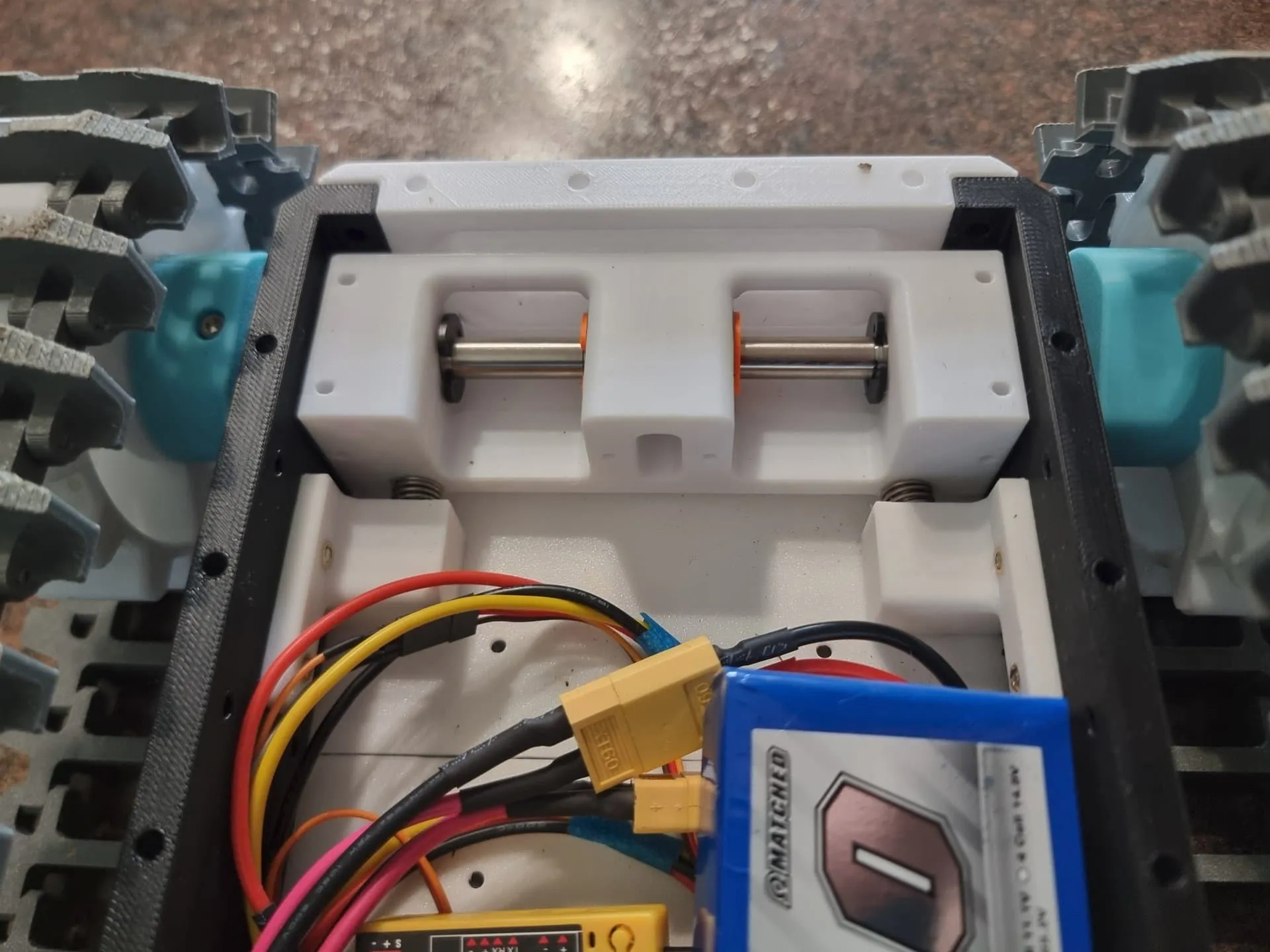
Front axle & track tensioning
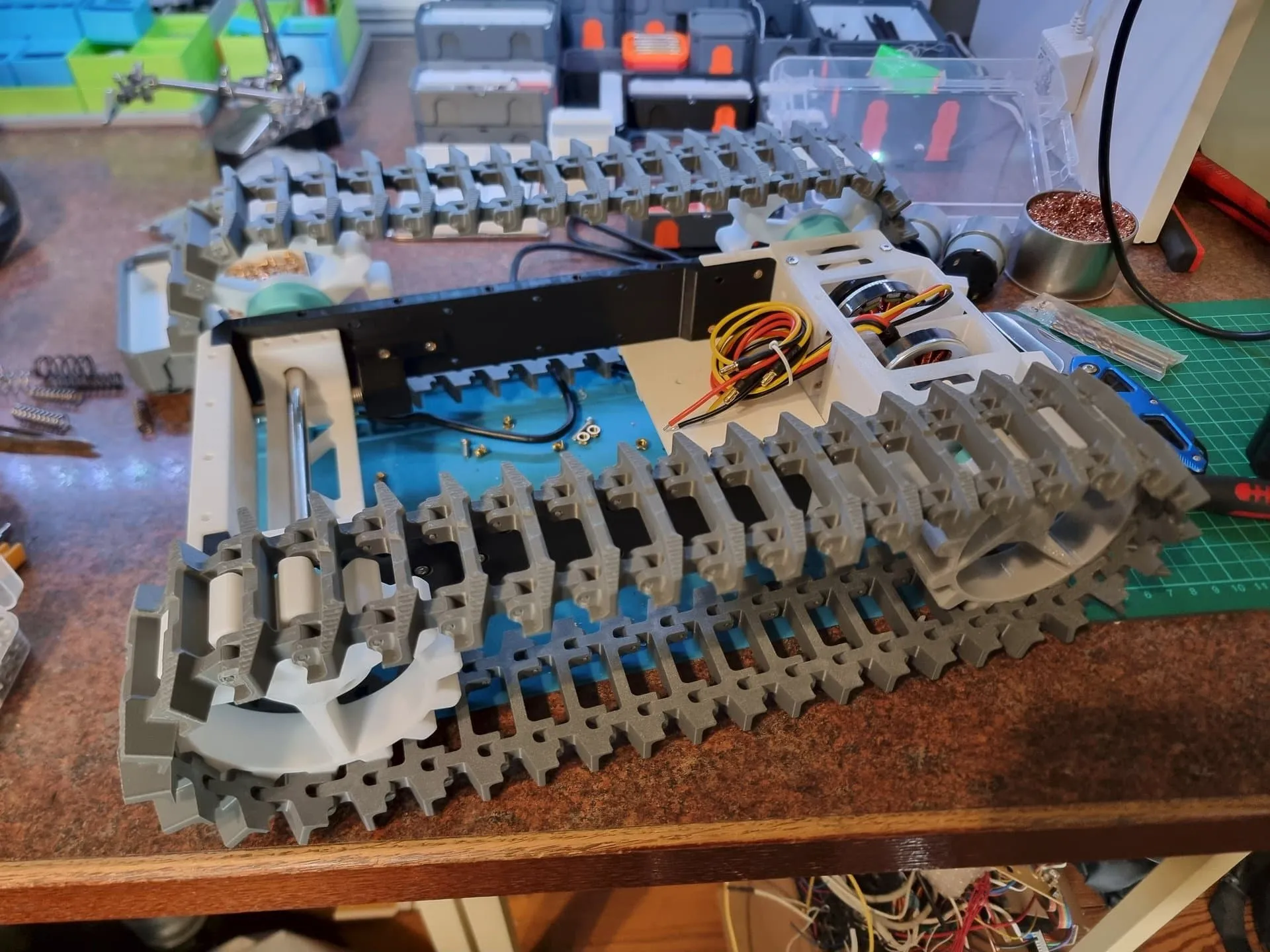
Since this design doesn’t have any track rollers, I’ve designed an automatic chain tensioning system. It works really well.
The front axle block is mounted on two rods to provide some forward/backward freedom of movement. It’s tensioned towards the front by two springs on the rods.
Drive system
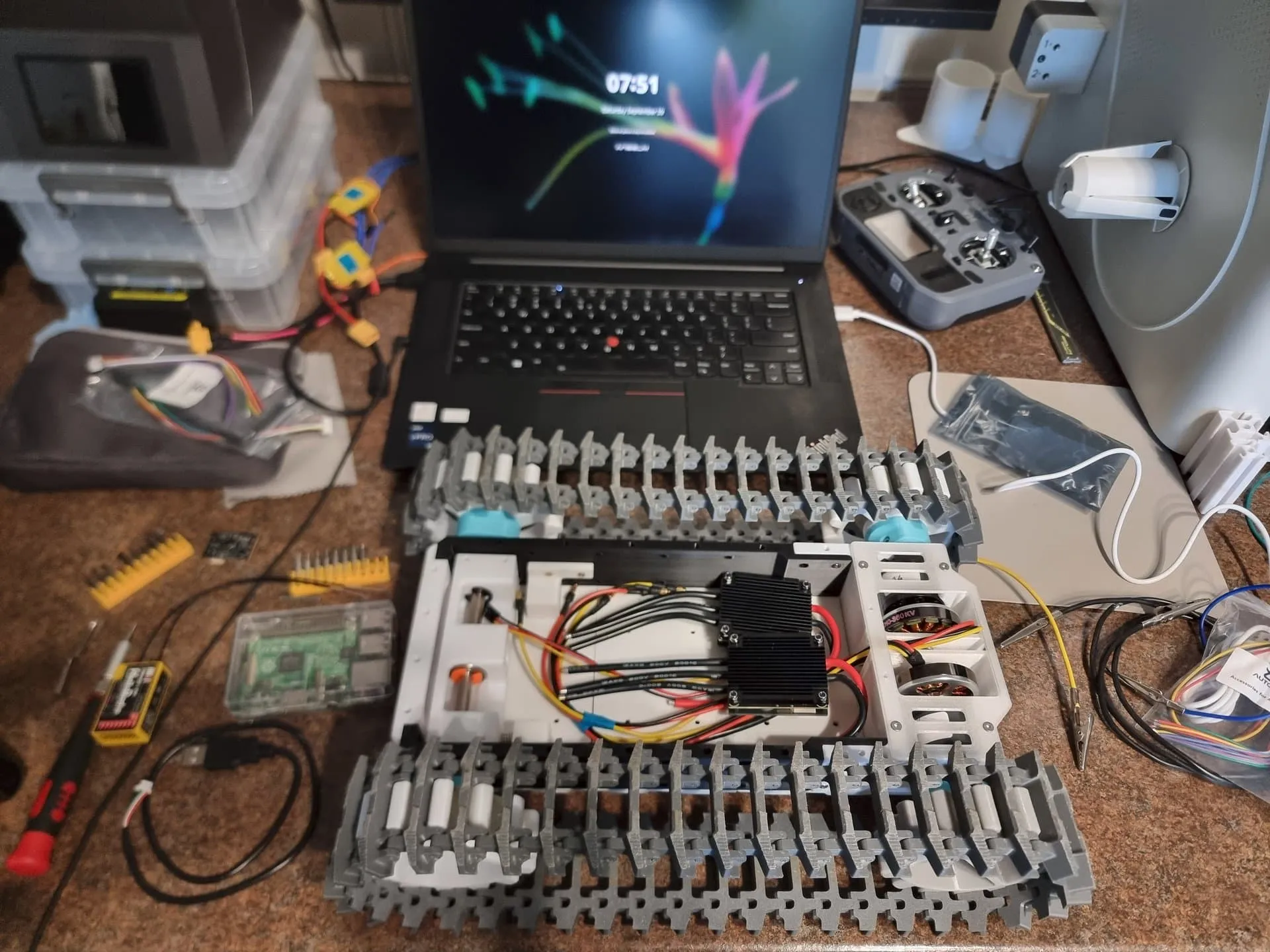
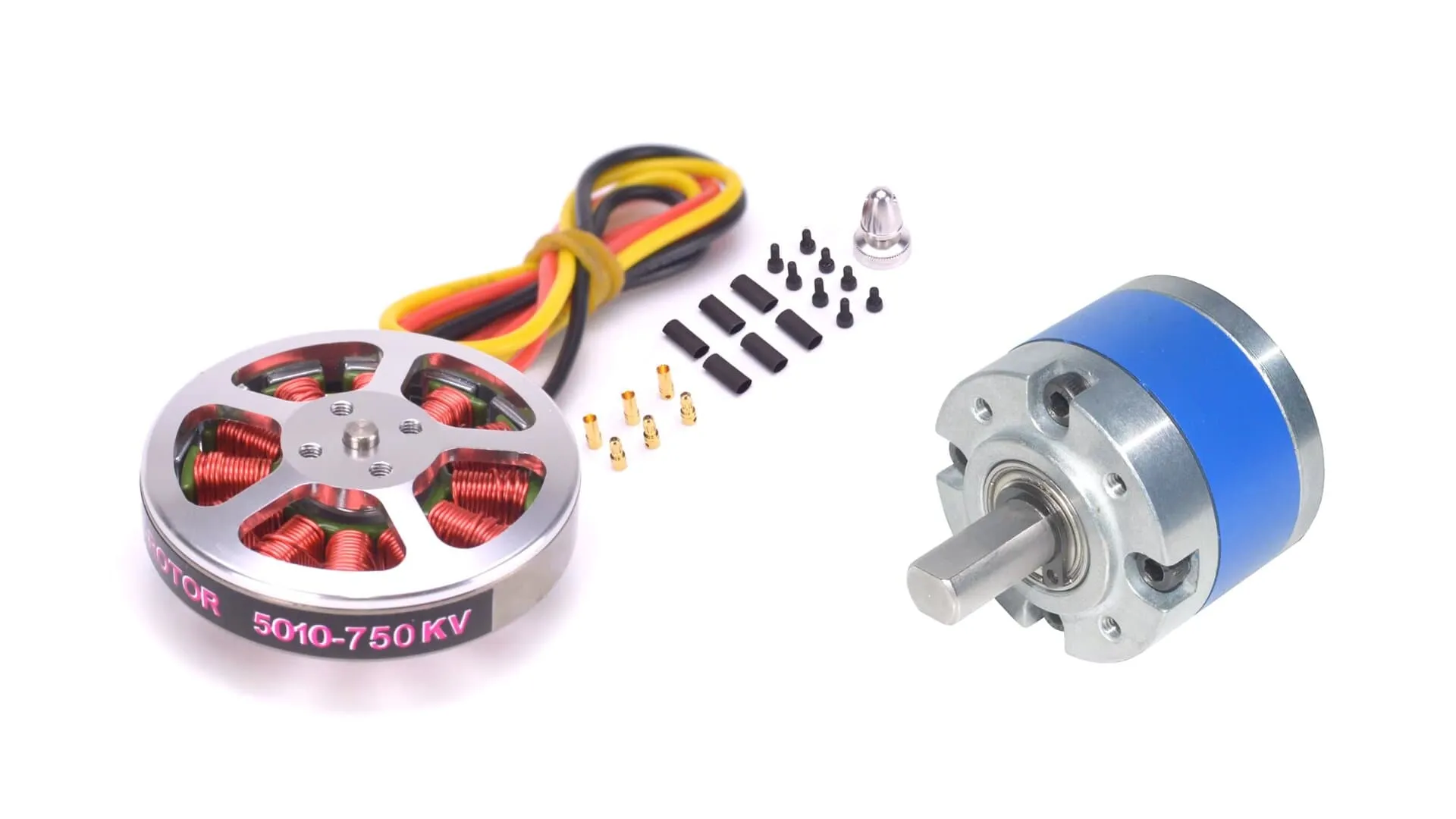
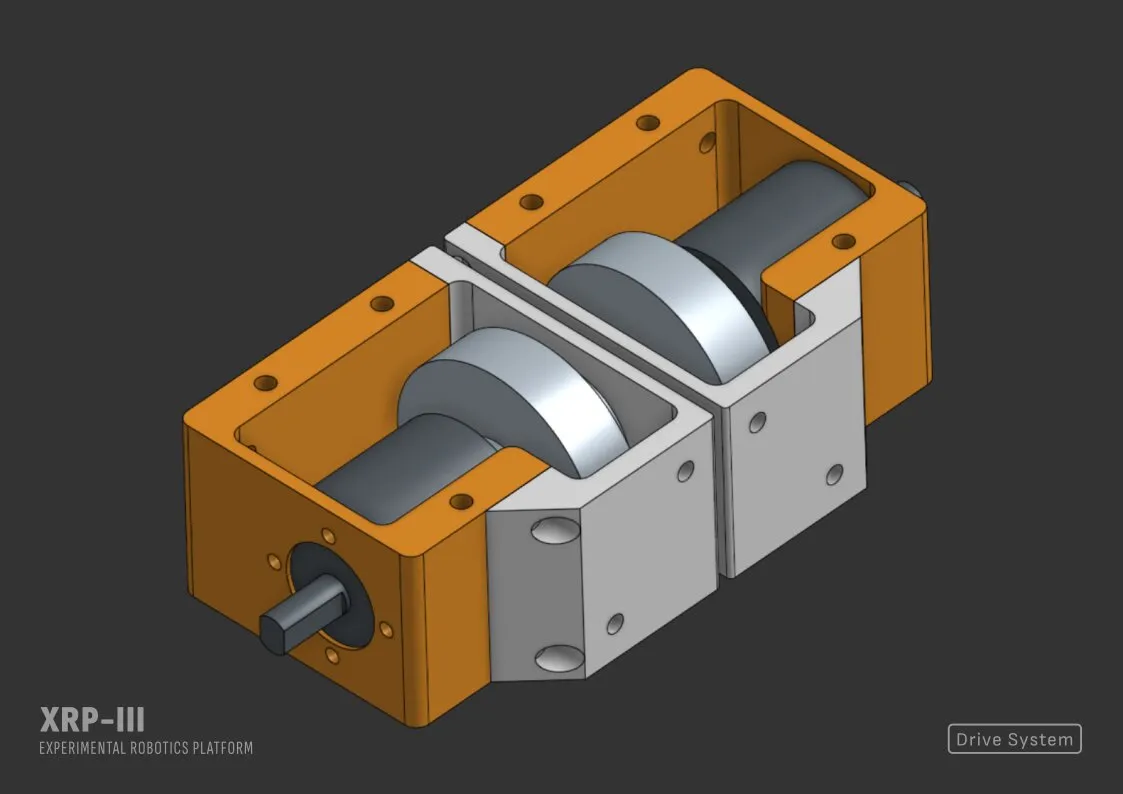
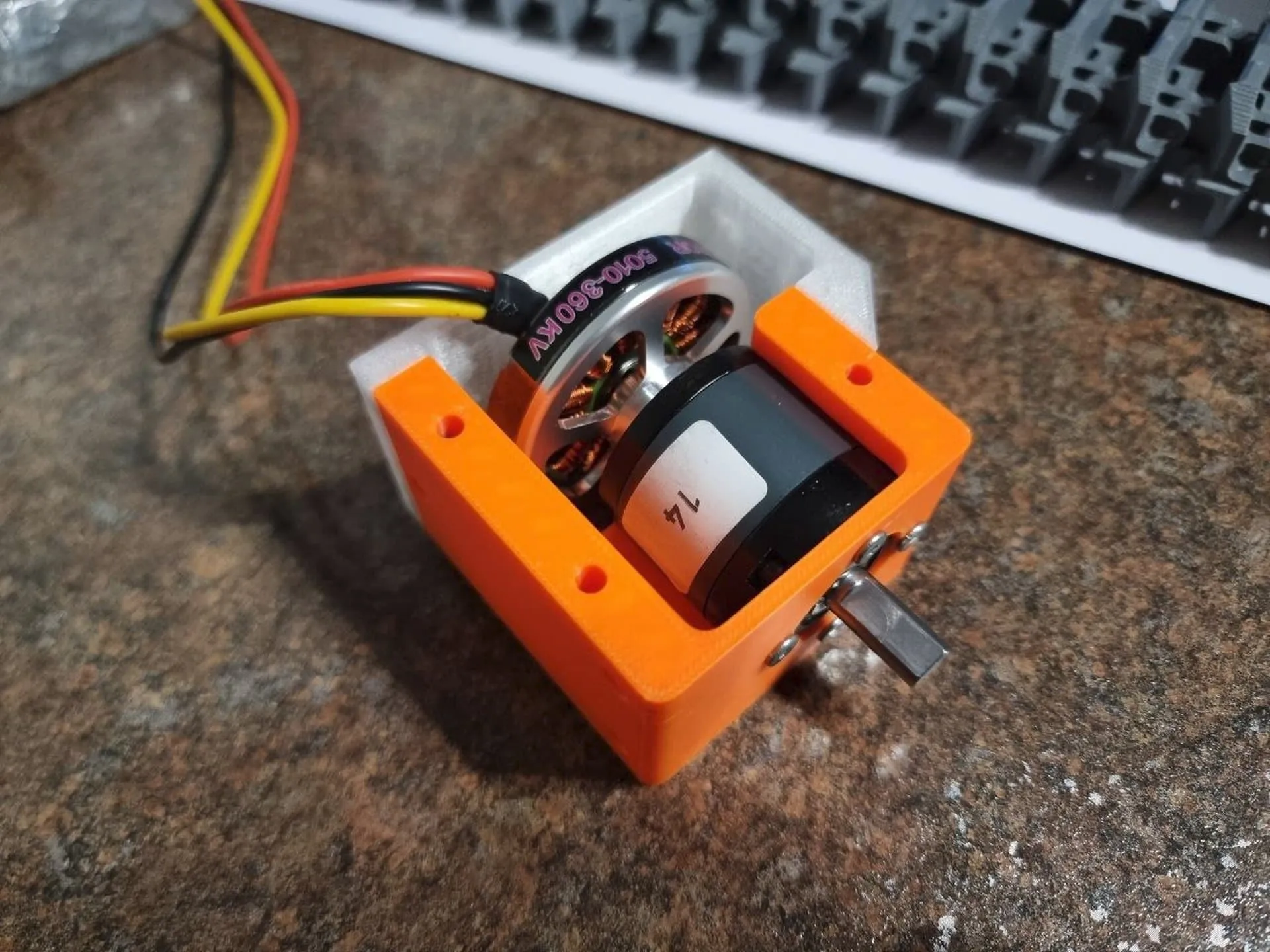
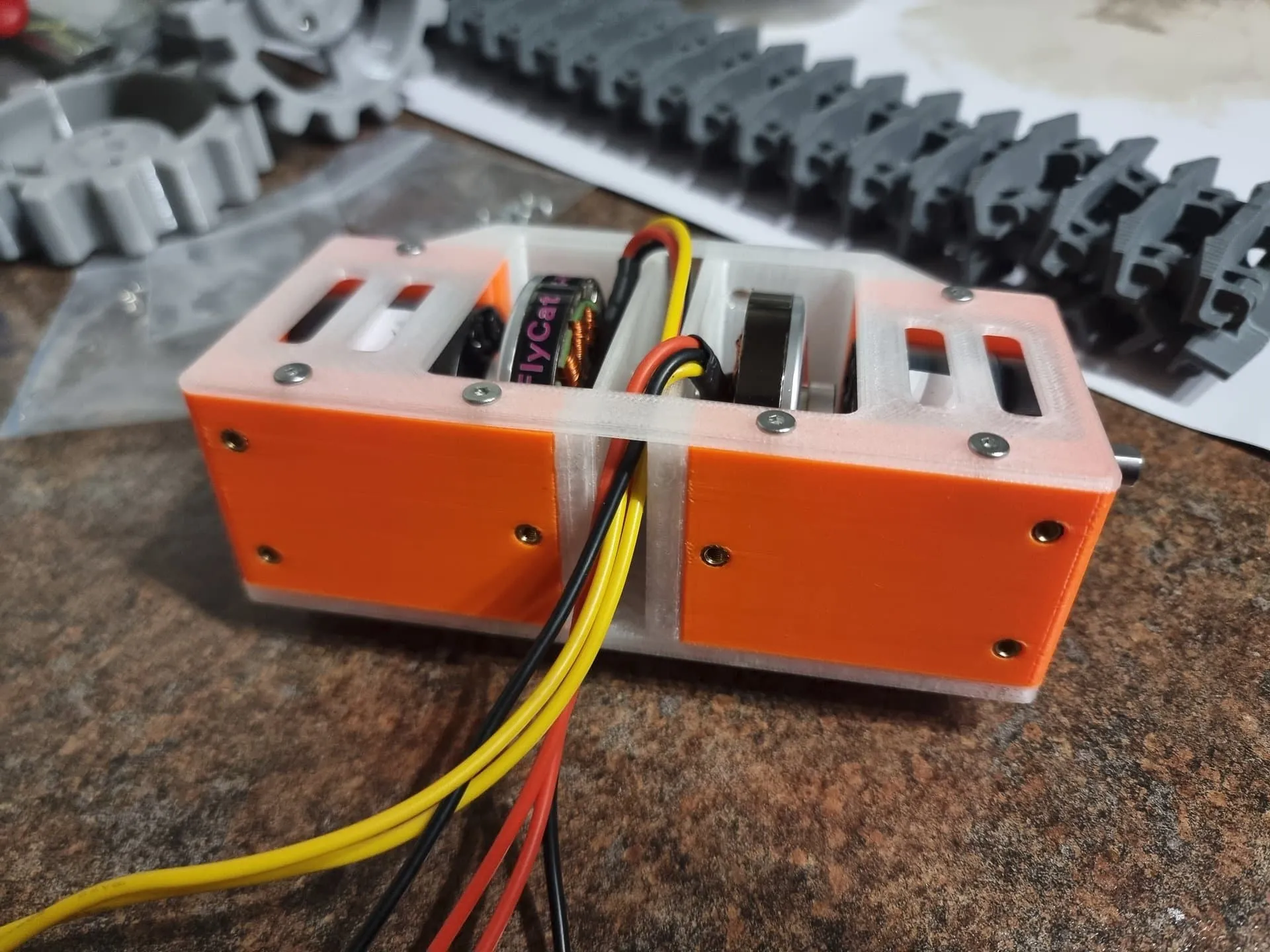
XRP-III uses two 5010 360kV BLDC motors, capable of being powered with 6S. However 3S works well too, with plenty of power. Speed is stepped down with 14:1 planetary gearboxes.
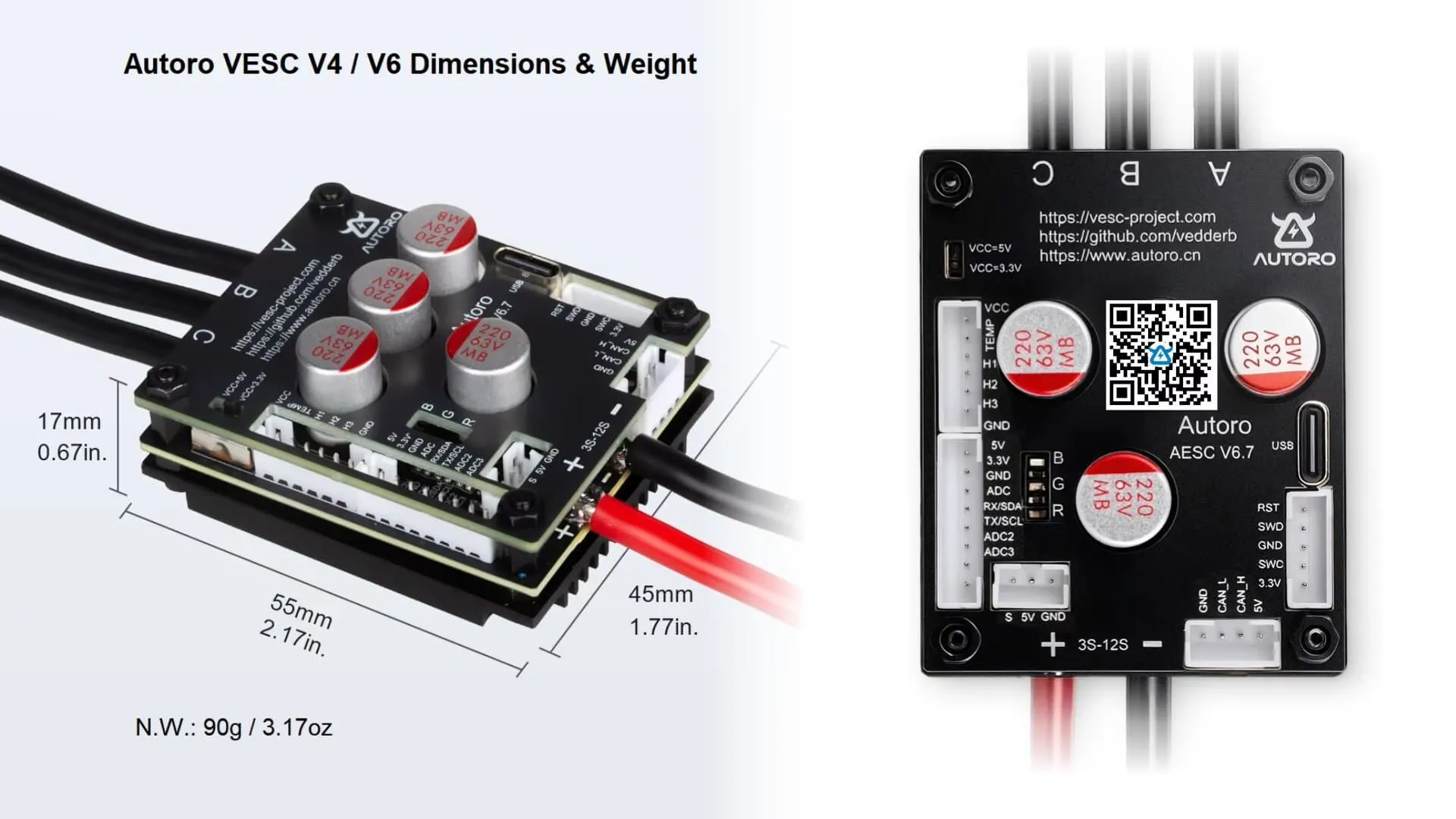
I’m using two Autoro V6.7 50A FOC VESC speed controllers. They’re not cheap at all but I wanted to get some hands-on experience with VESC systems.
Unfortunately, after doing a fair bit of testing, FOC/current control mode doesn’t work well with my motors (crunching at low speeds and constant speed control isn’t great). This could perhaps be rectified with advanced parameter tuning, but for now I’ve set the drivers to duty cycle.
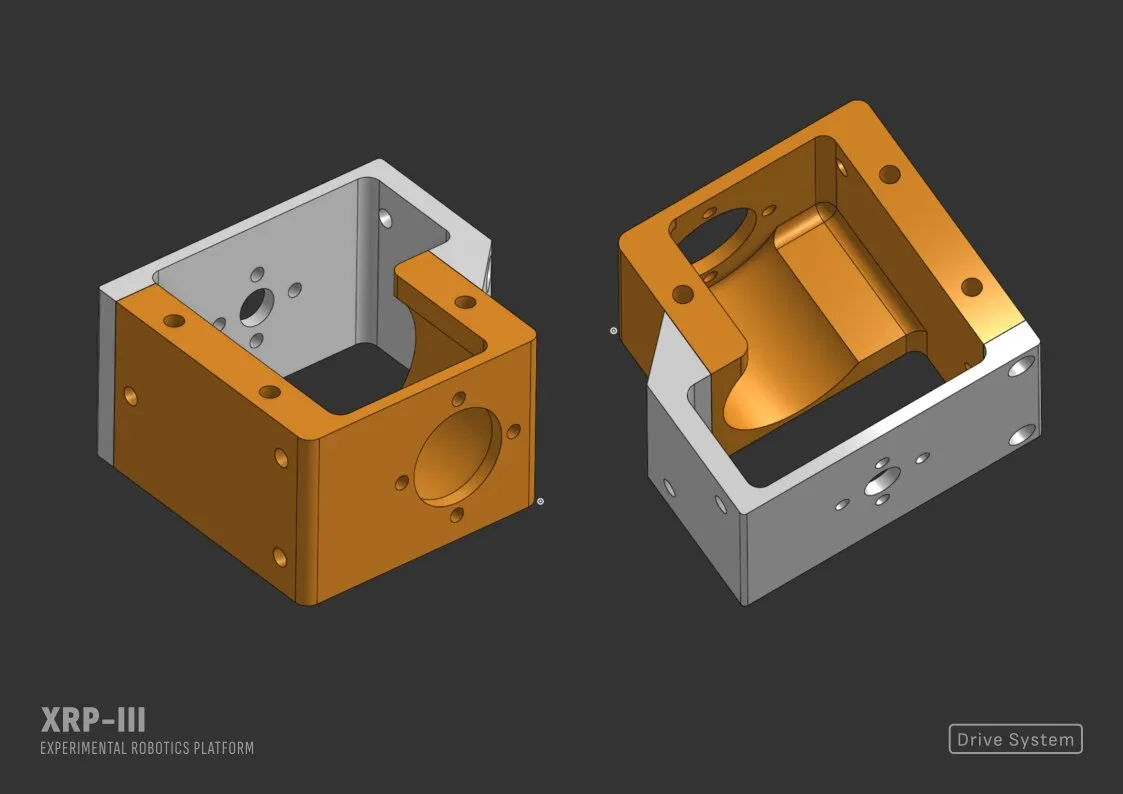
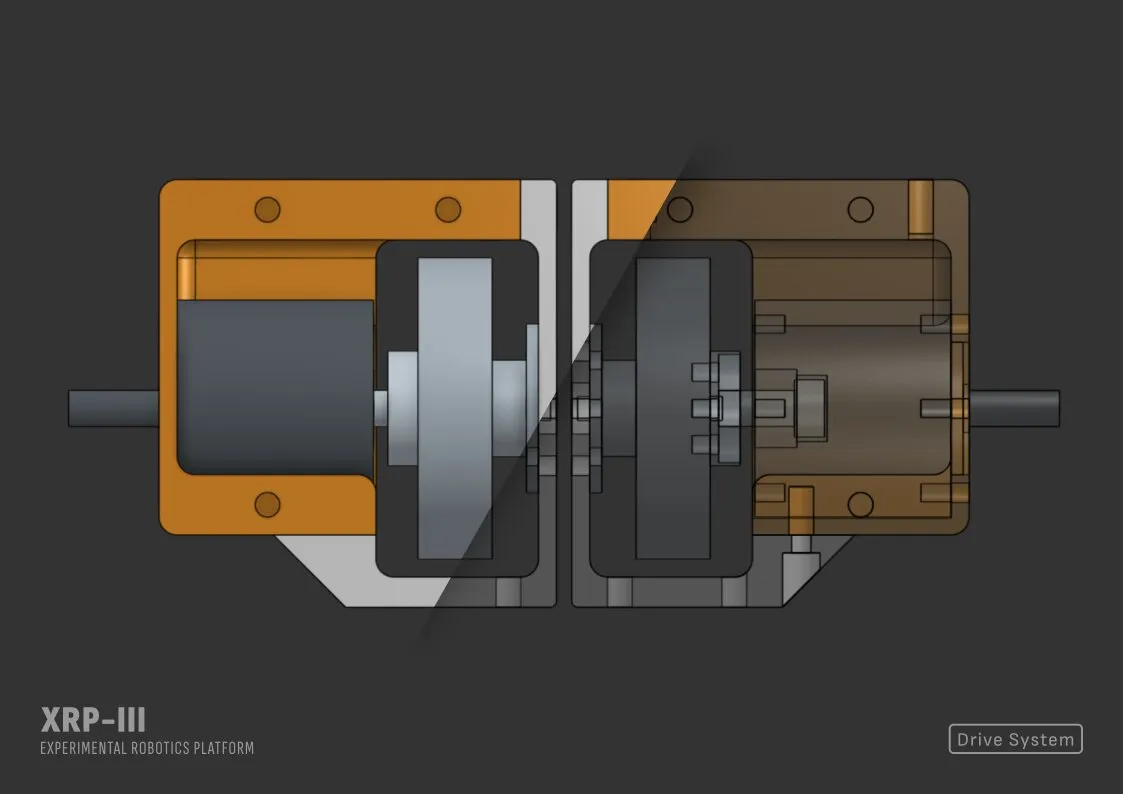
Drive system in 3D and real life. (Iterations go fast, so this design has changed already.)
Electronics
I’m planning to integrate a Raspberry Pi 2B, running a headless Linux distro. Also interested in trying out ROS (Robot Operating System).
The system will feature a camera mounted on the front/top, perhaps with servos for moving up/down left/right.
Planning to add a SIM module for remote access from anywhere with Tailscale and a GPS module for autopilot navigation.
Programming & control interfaces
There are two methods by which the robot can be controlled:
- ELRS transmitter
- Control over IP (webui) with a live video stream (not implemented yet)
More photos of the build process