My Experience with Obsidian and PKM
Why we need a personal knowledge management system
“The secret of what anything means to us depends on how we’ve connected it to all other things we know.” - Marvin Minsky
I’m currently reading the book Building a Second Brain by Tiago Forte. Highly recommended as it outlines how to get started with PKM.
Obsidian has become an indispensable part of my workflow. I use it to do everything from brainstorming, project management, organization, calendar use, to references, random notes & ideas, and anything else that can be written down. Obsidian is the core component of my PKM (Personal Knowledge Management) system.
This is not a static collection of data; it’s a dynamic workspace that functions as an extension of my mind. The files are plain text (Markdown) and therefore future-proof.
My perspective on learning new things has changed because of this. Instead of eventually forgetting things that I learn, I write them down in Obsidian and link it to other relevant notes in my vault. This has three benefits:
- Writing things down helps to solidify memory.
- It increases my desire to learn because I know this information isn’t standalone but adds to my collection of information and improves it.
- Linked concepts are much more useful than standalone snippets of information.
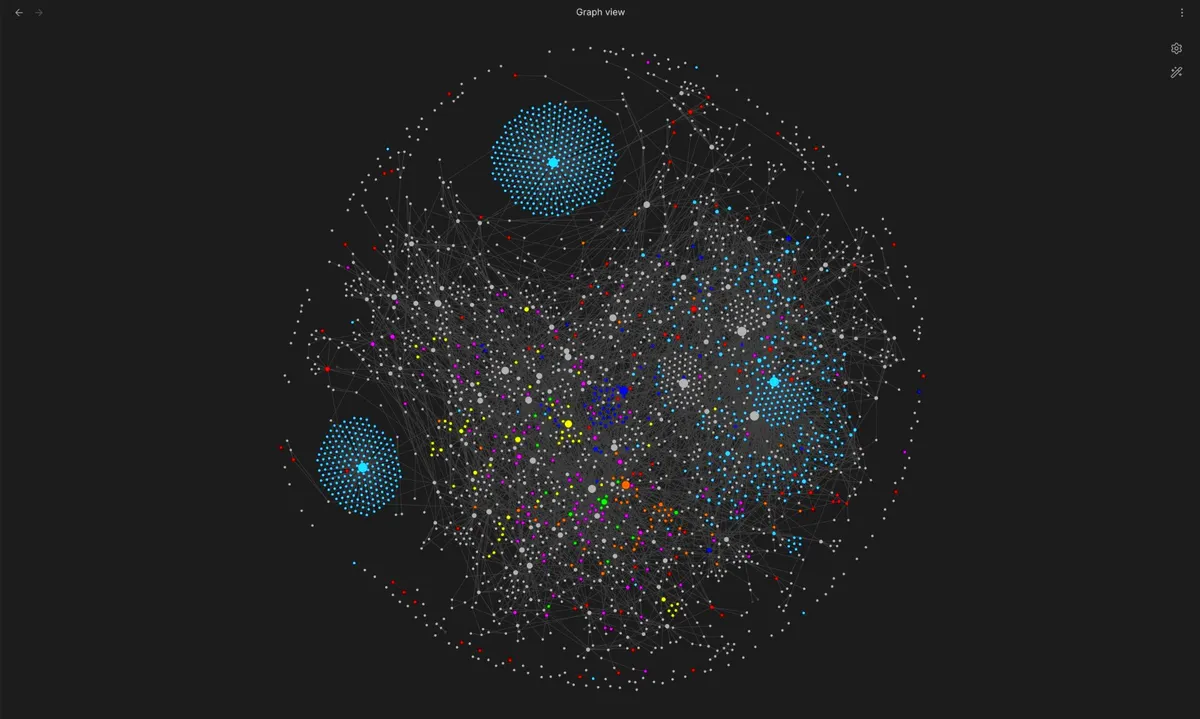
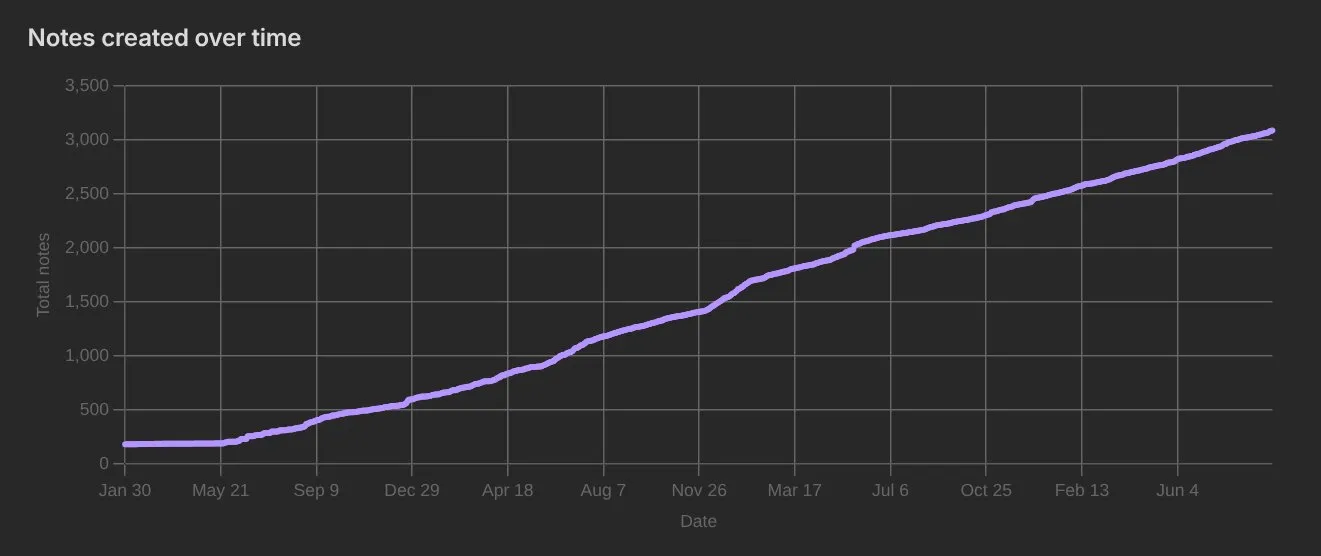
I’ve been using Obsidian for well over four years, and the result is over 3000 notes in total. Here’s a view of my notes and their links:
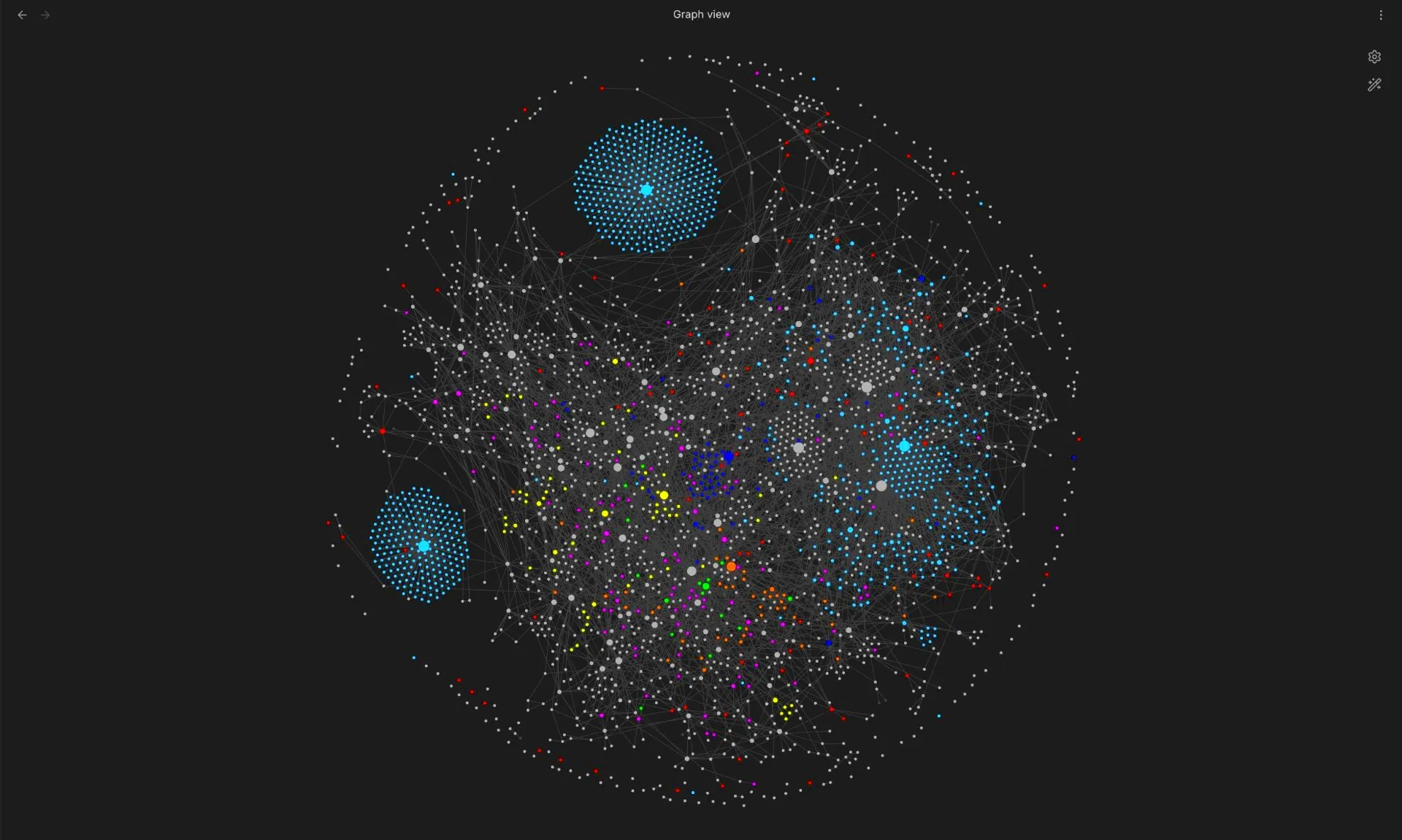
Graph view of notes created over the course of almost four years:
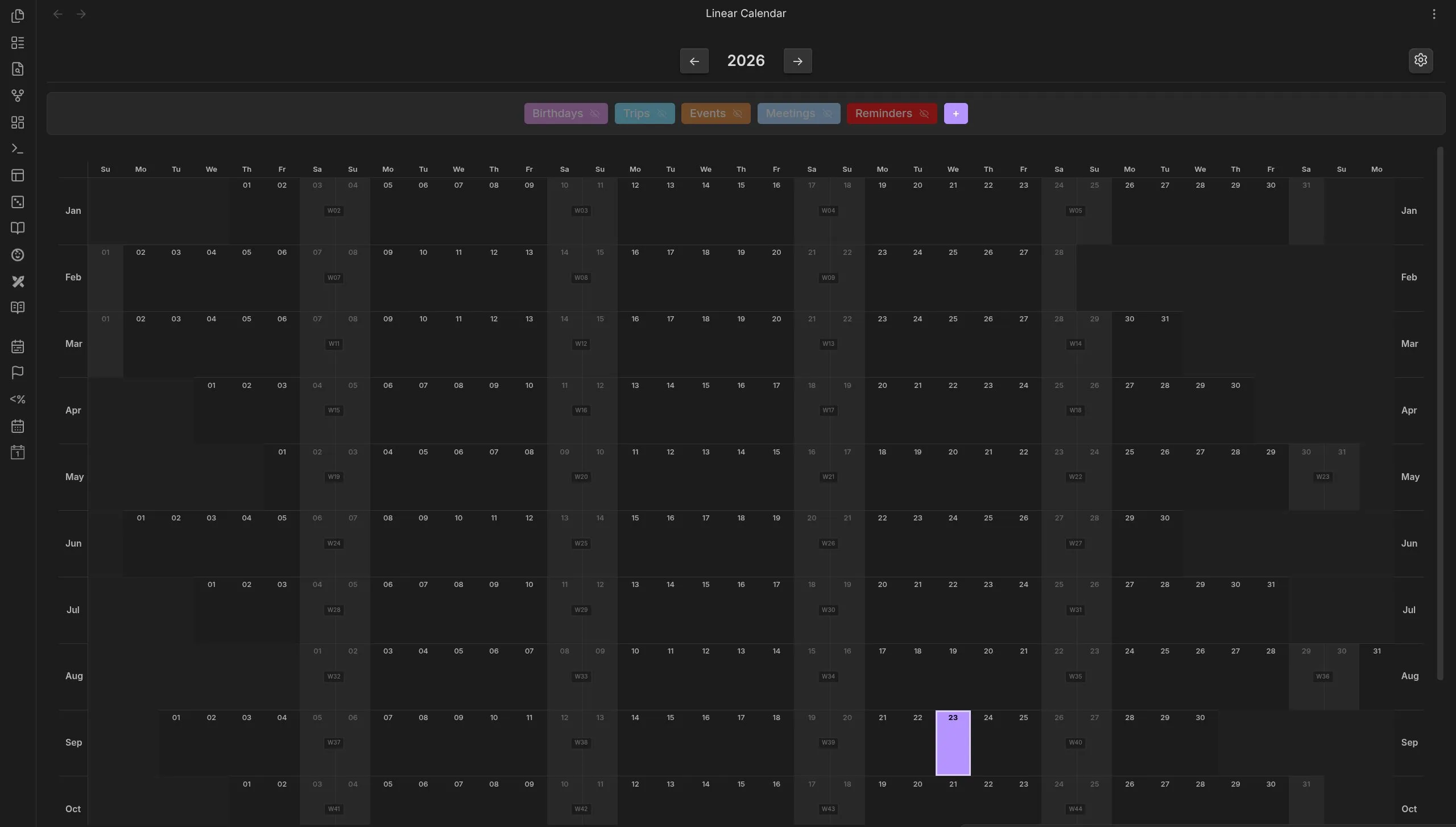
Not too long ago, someone made a linear calendar plugin for Obsidian. This is the only type of calendar that I use. It integrates really well with daily notes, and each event on the calendar is just a note with certain tags. (Calendar events redacted for privacy.)
Obsidian’s system makes it easy to manage periodic notes. I use daily, weekly, and yearly notes to track events, habits, and project progress.
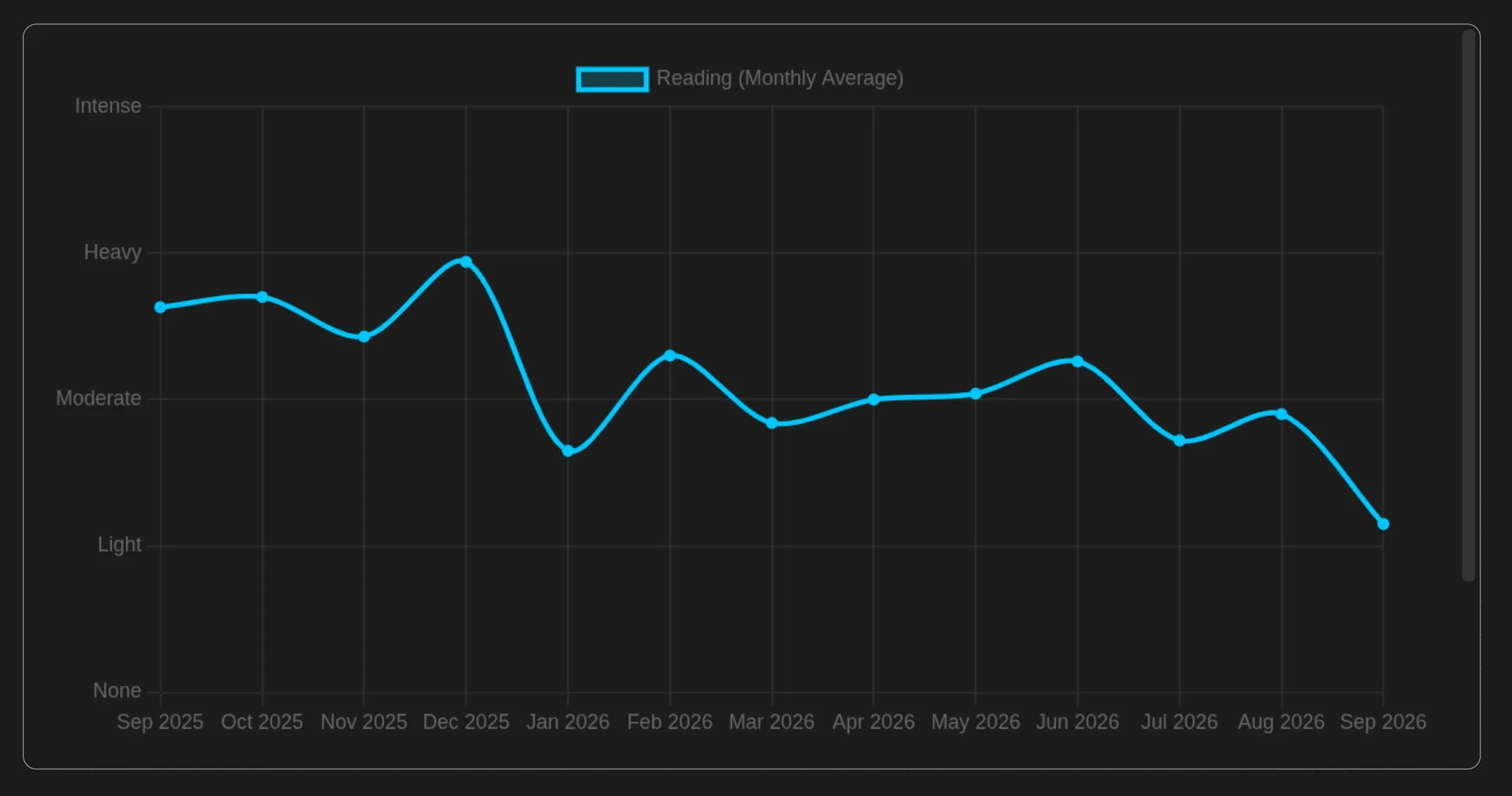
Due to the extensible nature of this system, I’ve used dataviewjs to create custom rendered graphs that show statistics which are pulled from daily note metadata. For example, here’s a graph showing my reading activity over the last year. (Due to major system changes, statistics here are only accurate as of February.)
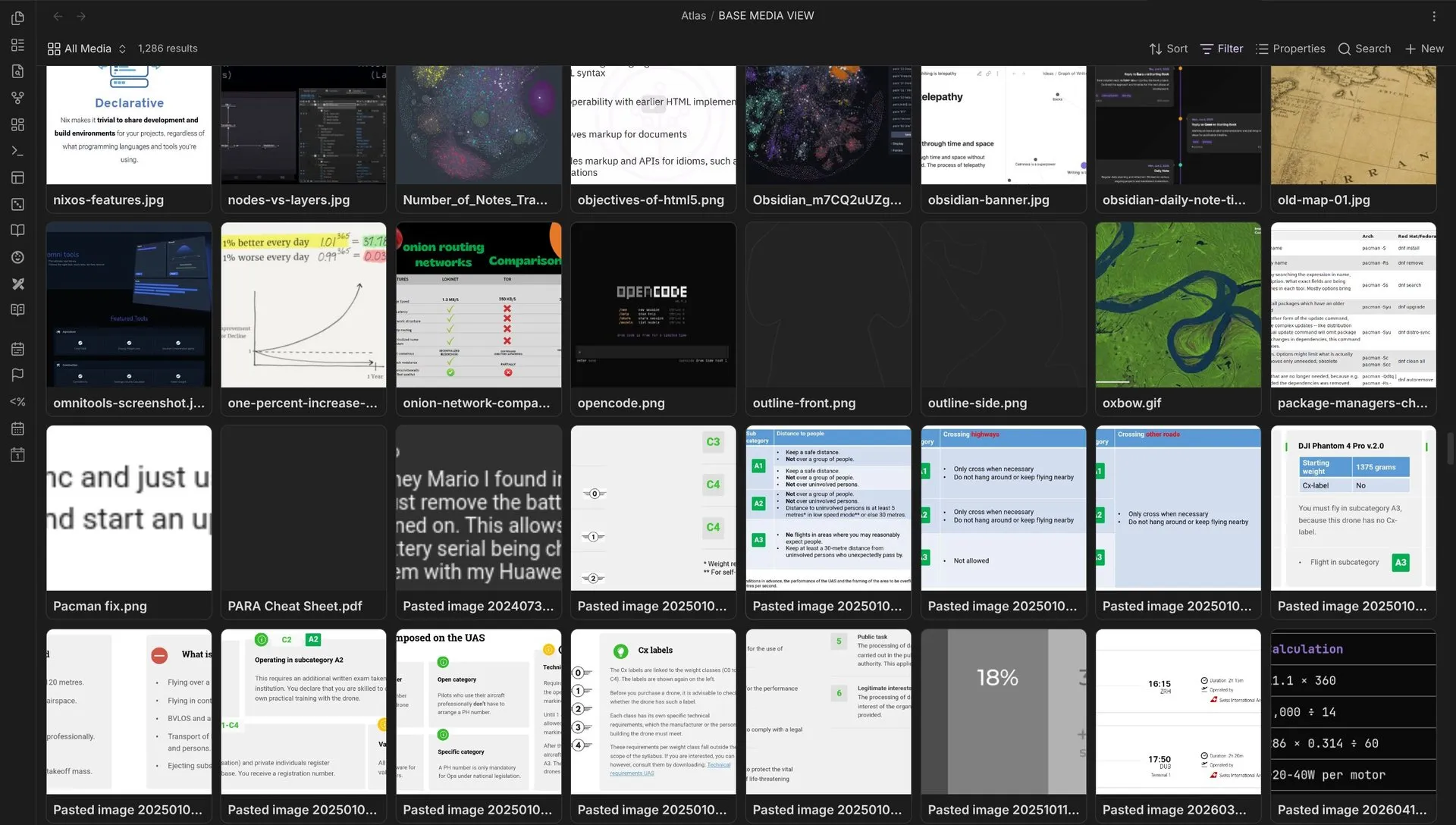
Every project, book, film, person, software, etc. has a dedicated note. If I finish reading a book, I mark it as read in the note metadata. This then updates dynamically in the Base views that I have set up. Bases are dynamic content collections based on specific filters, and can show content in multiple formats, including list items and image thumbnails. For example, I can pull up a Base view and immediately see which books I’ve read this year, last year, and so forth. This provides many insights into my habits, and is a source of motivation to read even more.
A base view showing all images in my vault:
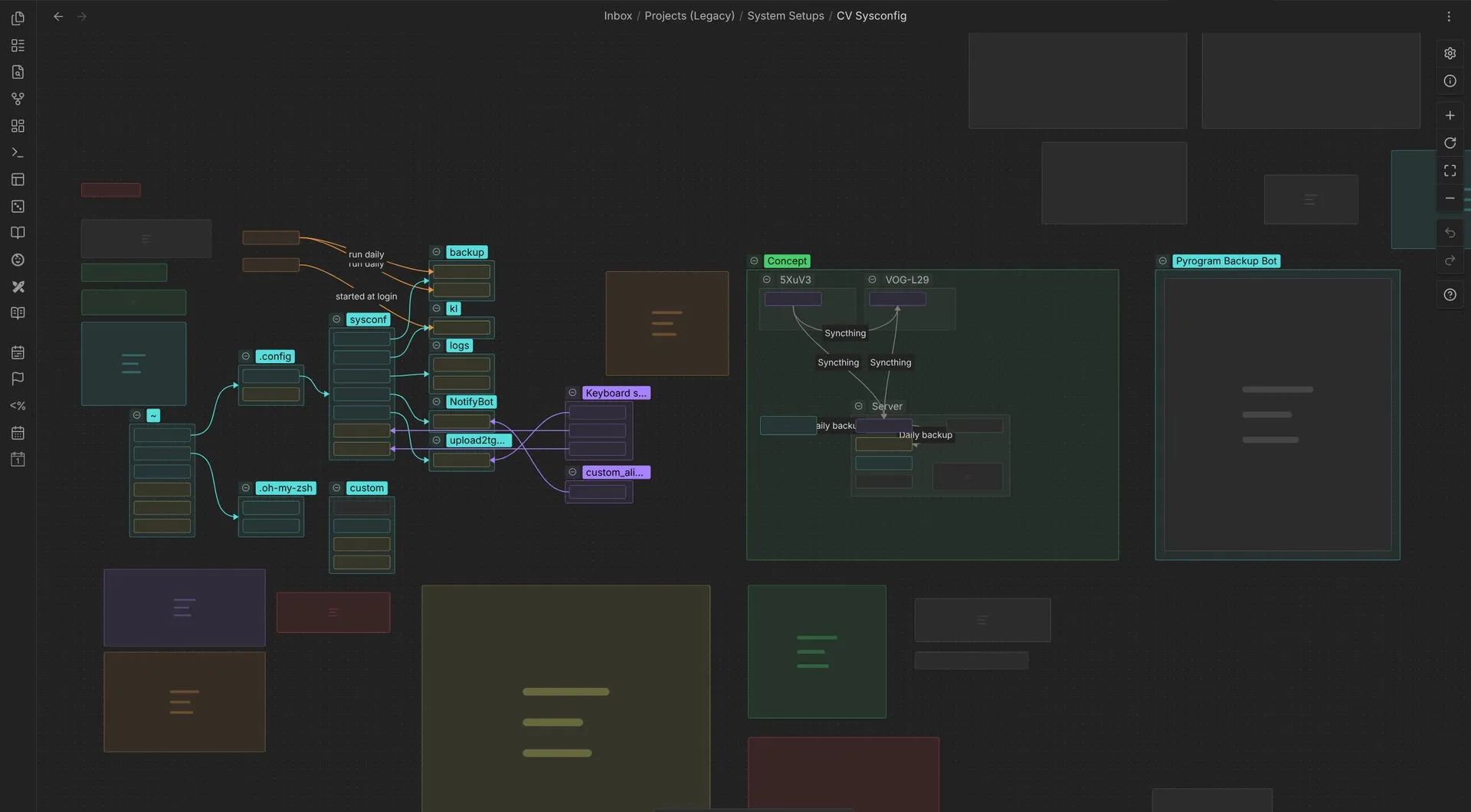
Obsidian also has canvas files. Notes, images, videos, and other media can be dropped in, arranged in any way, and connections can be drawn. Great for brainstorming and non-linear thinking. Here’s an example of a canvas I created while developing my digital infrastructure:
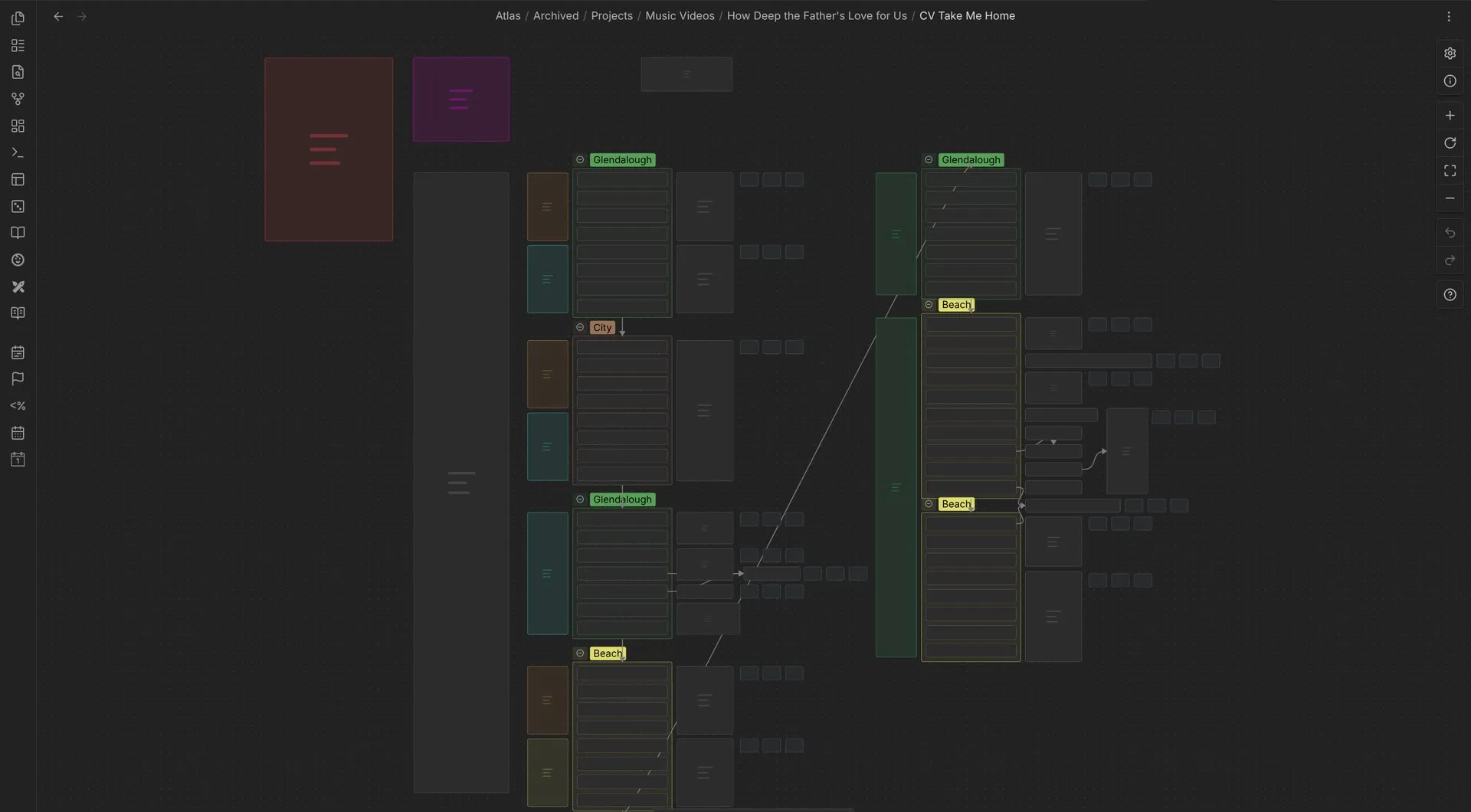
Here’s another one that contains the shotlist for one of my music videos:
If you don’t have a system to organize your life, try this. It doesn’t have to be Obsidian or setup like my system. I’m just trying to describe how much of a difference PKM can make. Just start, keep it simple, and eventually it will adjust to your needs and to the complexity you require.